Welcome to Green Social Thought’s collection of labor and economics articles. Take a deep dive into green economics and labor perspectives. As advocates for environmental responsibility and social justice, we bring you insights into a transformative economic approach that challenges the status quo, particularly degrowth and union and worker rights.
In a world grappling with the consequences of excessive consumption and environmental degradation, degrowth stands as a bold alternative. Our articles explore the the green vision of reshaping our economic landscape, with a particular focus on scaling down unnecessary and detrimental aspects, such as military expenditures and empowering workers through unionization.
Explore the economic implications of embracing degrowth policies, from redefining prosperity to creating resilient and inclusive communities. Exploration of economic alternatives that prioritize people and the planet.
Germany’s statutory minimum wage was introduced only in 2015, but legal protections have not prevented widespread wage theft. The article examines how employers evade minimum-wage obligations through unpaid overtime, off-the-clock work, inaccurate time records, illegal deductions, worker misclassification and other practices. Drawing on German trade union estimates, it reports that workers may have lost up to €64 billion between 2015 and 2024, with part-time workers, contract workers, women and workers in eastern Germany particularly affected. The article also examines weak enforcement, staffing shortages in inspection agencies, and the need for stronger collective bargaining, inspections, sanctions and whistleblower protections.
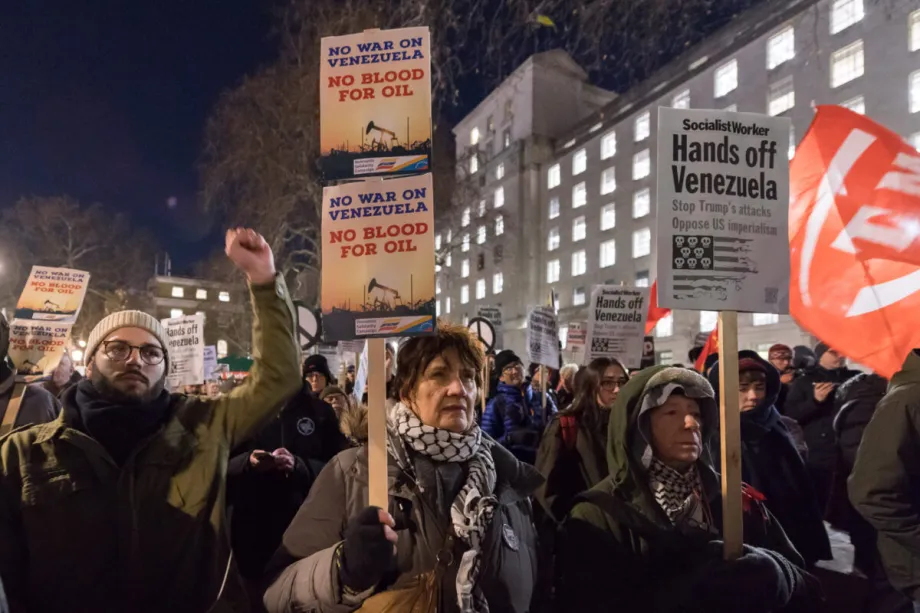
Tension between American control and Venezuelan sovereignty lies at the heart of a broader geopolitical struggle over who will shape the country’s economic and strategic future.
Bolivia’s new era has also produced a powerful image: the exile of Morales in the Chapare, the subtropical region of the Cochabamba Department known for its coca leaf crops. Coca-growing peasant unions, which function like militias, are protecting the former president from arrest stemming from several ongoing judicial proceedings—including one involving the alleged abuse of a minor, a partner said to be underage when the relationship began.
Brazil holds around 23 percent of the world’s known rare-earth reserves but produces only a small share and lacks the industrial capacity to process these minerals into high-value products. As foreign companies move to secure Brazilian deposits, the country risks repeating a familiar pattern of exporting raw materials while retaining environmental costs and limited economic value. Vijay Prashad examines the growing rare-earth rush, its impact on rural and quilombola communities, and the technological choices shaping extraction. He argues for stronger public oversight, domestic processing, technology transfer, environmental safeguards, and investment in Brazilian research and manufacturing capacity.
Bolivia’s persistent fuel shortages are exposing the limits of an economy built on hydrocarbon extraction. Long queues for gasoline, diesel and propane are affecting households, farmers and rural communities, while preferential access for agro-industrial businesses highlights unequal distribution. At the center of the debate is the Tariquía Flora and Fauna Reserve, where the government is promoting gas exploration despite opposition from communities that depend on the forest and its ecosystems. Claudia López Pardo examines the links between fuel scarcity, extractivism, energy policy and social reproduction, arguing for an energy transition that reduces Bolivia’s dependence on fossil-fuel revenues and protects territories andcommunities.
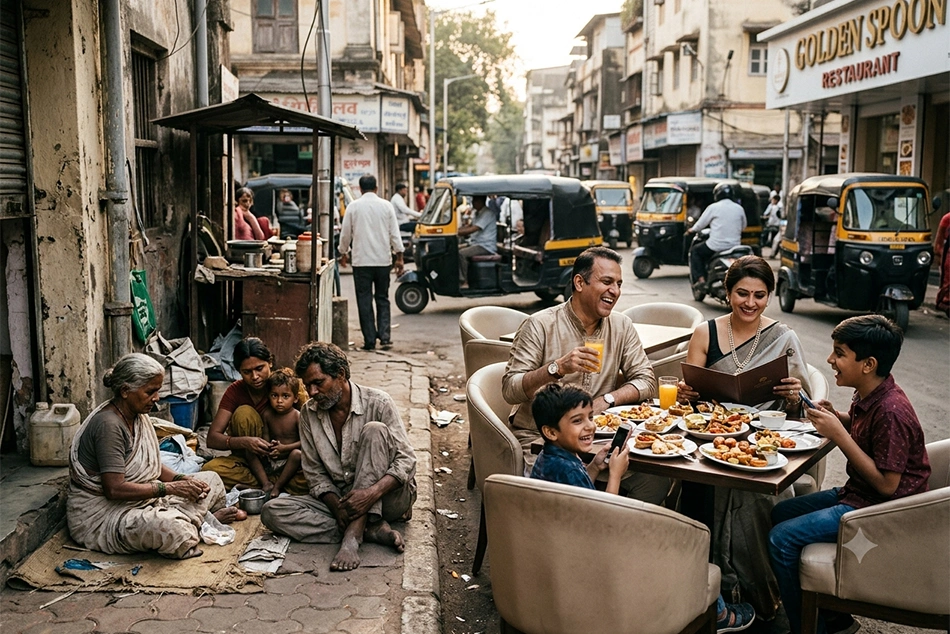
Why should 5, 7 or 9 per cent growth ultimately matter unless sustained growth gives us more productive jobs, greater investment in education and health, rising real incomes, greater household savings and asset ownership, better public services, declining vulnerability and a progressively wider distribution of economic security?
“The book isn’t just a celebration of the past, but an encouragement to see what we can learn to help us today” (Scipes, p. ix, 2026,). Dr. Kim Scipes’ Unions, Race, and Popular Democracy: Building A Progressive Labor Movement is a commemoration of one union’s distinctive approach to social justice unionism that should change the way that we think about organizing not only in the workplace, but in any response to important issues around the world. Though centered in labor activism from a sociological lens, the findings and framing of Scipes’ work produce an analysis critical for Northwest Indiana and […]
The IMF and World Bank are not subjects the corporate media cover in any real sense. Instead, their role is treated as unquestionably immutable and beneficial.