
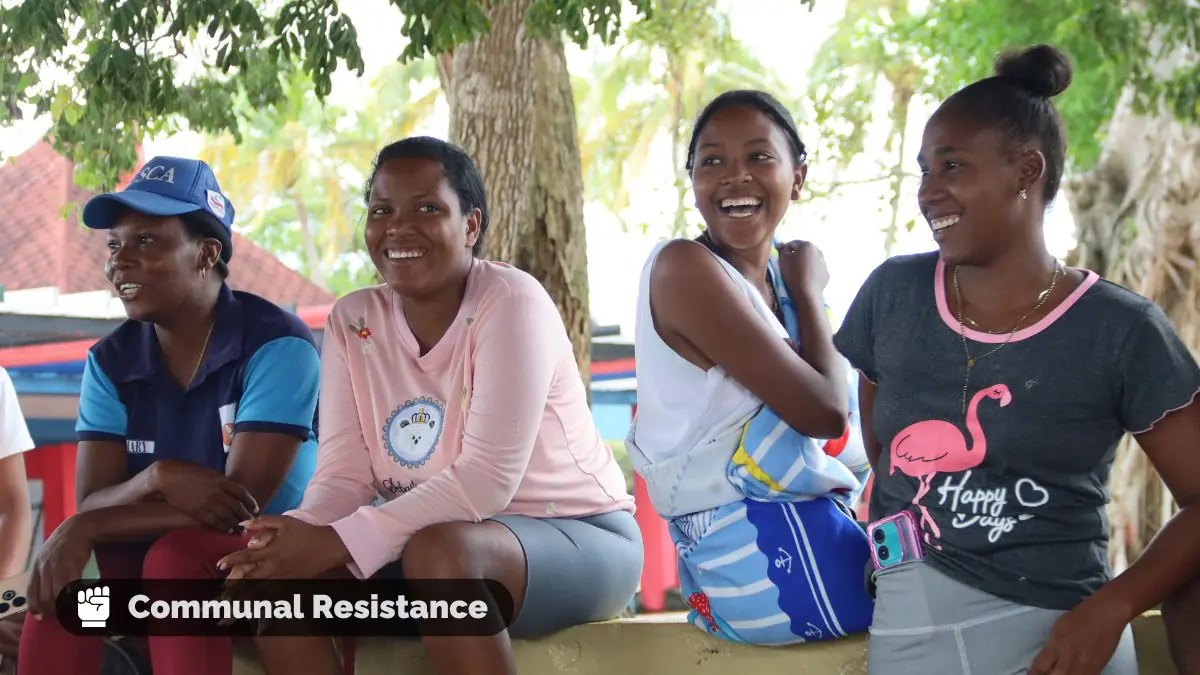
On the southern shore of Lake Maracaibo, Palmarito is an Afro-Venezuelan community shaped by centuries of history, culture, and resilience. Its people carry forward traditions rooted in their African heritage and in the fishing trade. Central to Palmarito’s way of life is the socialist commune, a form of popular self-government that transforms everyday life and work into a shared project.
The town is part of the “pueblos santos,” a cluster of Afro-descendant communities bound together by devotion to San Benito of Palermo, the “Black saint,” and the ritual rhythms of the Chimbánguele. Life in Palmarito has always revolved around the lake—its fish provide sustenance and its water routes connect those living along its shores. From the struggle against enslavement and the creation of maroon communities to today’s communal self-governance, Palmarito’s story is one of resistance and collective action.
This testimonial series on the Palmarito Afro-Descendant Commune has traced the project’s trajectory from its historical origins (Part I), through the role of culture (Part II), its cooperative fishing economy (Part III), and, finally, the impact of the US blockade and the community’s collective responses to it (Part IV). In this final installment, the conversation centers on Hugo Chávez and how his legacy continues to inspire the Palmarito communards.
[Part of the Communal Resistance Series.]
Chávez’s Legacy
Chávez’s vision and policies—continued under President Nicolás Maduro—have opened doors for a people who had long been excluded, making education, housing, and political participation possible in rural areas such as Palmarito.
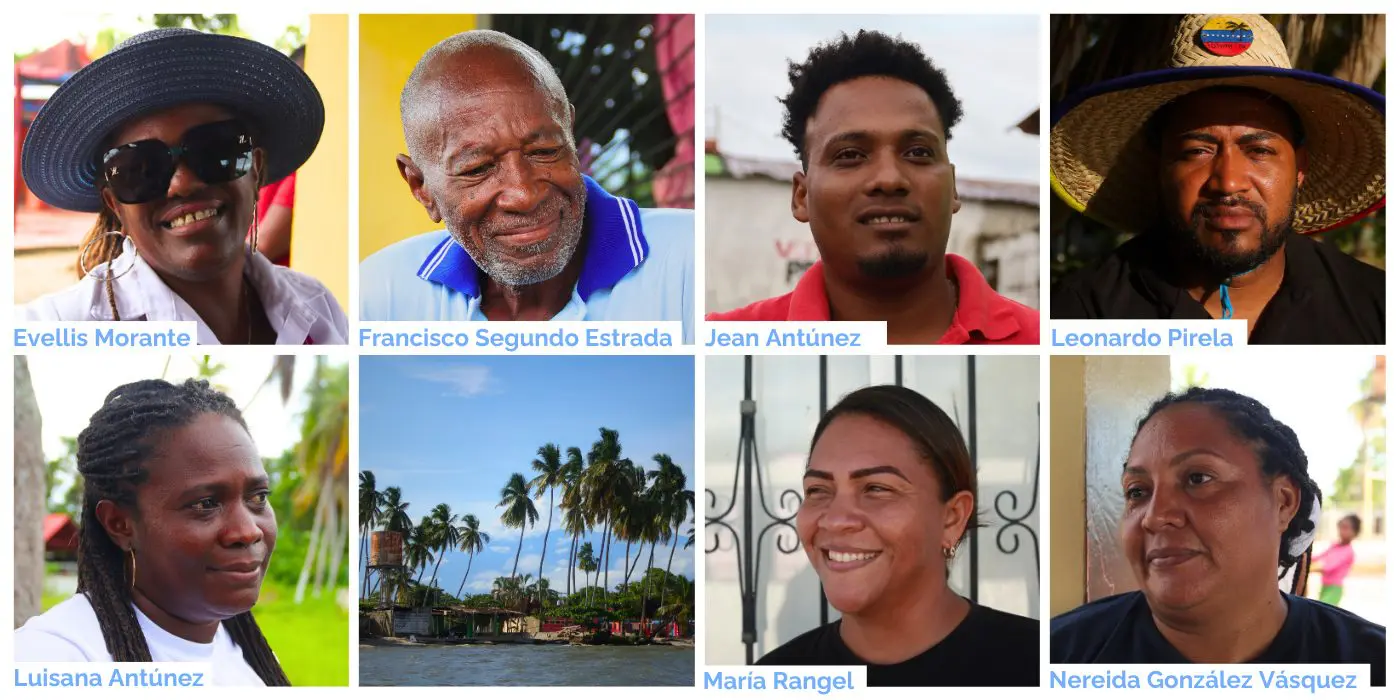
Leonardo Pirela: Chávez is a father to us, the giant of giants. Even as a child, I felt his magnetism. I recall in 1998, during his presidential campaign, running after his caravan with other kids from the community. That was the moment politics first caught my attention.
For me, there is a clear before and after: before Chávez, my world was cartoons and games; with him, I began to feel committed to my community and to my country.
Years later, in 2012, I had the chance to work with the Comandante as a PSUV coordinator in Cojedes state. That time is unforgettable for us, because he gave visibility to people like me—Black youth from fishing and campesino communities who had been denied opportunities for generations. He gave a voice to those who had long been silenced.
I was also able to study because of the Revolution. Thanks to Chávez’s educational initiatives, many of us could attend university, access libraries and computers, and even live in dorms. He prepared us to assume responsibilities, including positions in government.
For my community, Chávez was a giant figure who recognized us—the humble and the oppressed—and gave us the chance to grow and become protagonists in the making of a better world.
Jean Antúnez: As a young man, I saw Chávez on stage, and he opened my eyes. He stood with the people, listened to us, and helped us. Thanks to him, we’re a stronger community.
There’s still a long way to go, but we are on the right path, on Chávez’s path. Now the fisherfolk councils [CONPPAS] and the communes are collaborating closely with the government of President Nicolás Maduro to make Chávez’s dream a reality.
María Rangel: Chávez brought hope to our people. With him, we discovered a new way of doing politics—one in which we became actors. Before, almost nothing from the state reached our Afro-descendant community: we were invisible.
With the Revolution, electricity came to the humblest households in Palmarito, the roads were paved, and houses were built for families who had never had a roof of their own.
The Revolution also brought education: those who had never learned to read became literate, and many who had been forced to abandon their studies were finally able to finish high school and even attend university. Dreams that once seemed impossible began to come true.
Yet perhaps the most important gift Chávez gave us was the conviction that communal organization could transform our reality. That has carried us through the hardest of times, when the US blockade snatched away food, medicine, and fuel. In those moments, it was our organization—our commune—that sustained us.
Nereida González: Chávez gave power to the people, and he would often say: Only the pueblo can save the pueblo. That is true—even with a revolutionary government, bureaucracy can slow things down, but with resources in our hands, in the hands of the people, we see real change. That’s the beauty of the popular consultations that are going on now.
POPULAR CONSULTATIONS
Nereida González: Popular consultations are a stroke of genius—I would go so far as to say they are great discoveries that truly activate communal life.
President Nicolás Maduro launched this initiative in early 2024, and it quickly became the motor of organization in our community. Why? Because consultations not only create the conditions for calling assemblies, they also become a school of self-government: we debate, decide, and then carry out the projects we choose.
Assemblies, which are the heart of communal life, are now more frequent because consultations put real decision-making power in the hands of the people. Each communal council presents proposals—paving a road, building classrooms, repairing infrastructure—and then the pueblo decides what comes first.
This is revolutionary: we manage our resources directly, without waiting for someone from above to fix our problems.
Evellis Morante: Through the popular consultations, we are nearing completion of two strategic projects: building new classrooms for the high school and repairing the most deteriorated roads in town.
The high school had only five classrooms for more than three hundred students, so fifth-year classes were held under a tree. Thanks to the careful use of resources coming from the consultations, we are now giving Palmarito’s youth the classrooms they deserve, while also paving the roads of El Empujón [a Palmarito neighborhood], which had long been in disrepair.
Francisco Segundo Estrada: Being part of the commune allows us to engage directly in government matters and access resources via popular consultations. The commune is the real government of the pueblo for the pueblo.
Evellis Morante: We have advanced step by step, addressing roads, water supply systems, housing, and schools—sometimes with resources from the crab processing plant, other times through the popular consultations. Yet many challenges remain: we have to build more homes and contain the San Pedro River, which still threatens our community when it rains hard.
Even so, the future shines bright. We know that the organized pueblo—what we call popular power—can solve the problems we face, and we can do so with remarkable efficiency. We will never again become passive, not like in the Fourth Republic [1958-1999].

COMMUNITY ORGANIZATION
María Rangel: The commune is crucial now because this is the time of popular power. We must work hard to make our organization more robust, advance projects, and truly empower ourselves to continue transforming our community.
Leonardo Pirela: Chávez taught us that fisherfolk and campesinos could become leaders. He gave us tools to grow, to govern ourselves, and to live with dignity. That seed has grown and is alive in Palmarito: the community is our sphere of activity, our way to keep building a better world.
Luisana Antúnez: Here, “Commune or Nothing” is not just a slogan—it’s our way of life. It is how we endure the blockade, how we feed our families, and how we find hope in the hardest of times.
Chávez prepared us for these times when he said: Only the pueblo can save the pueblo. In Palmarito, those words are alive. They guide us, sustain us, and remind us that our strength lies in our unity. Every day, through the commune, we make those words a reality.