
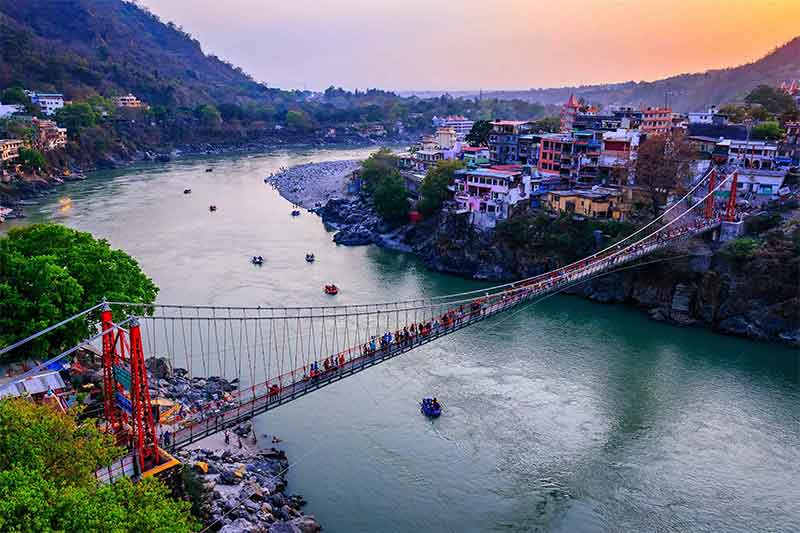
A river is not just a channel through which water flows. It is an ecological system, a source of food and livelihood, a regulator of landscapes, and in many regions, the foundation upon which human civilization has developed.
However, modern development has increasingly treated rivers as infrastructure: used to dam, divert, channel, extract water, and, in many cases, as a dumping ground for waste.
That approach has consequences. The question is no longer how much water a river can deliver. Rather, the question is whether human societies can continue to demand from them without destroying the ecosystems that support them.
Rivers are bearing the brunt of the climate crisis
Rivers are now bearing the brunt of the effects of a changing climate.
Changing rainfall patterns, prolonged droughts, severe floods, rising temperatures, and the rapid retreat of glaciers are altering river systems around the world. For example, Himalayan rivers connect climate processes in the mountains to the lives and livelihoods of millions of people living downstream.
Climate change does not respect political boundaries. Water discharged from a mountain catchment may cross multiple jurisdictions before reaching the sea. As a result, river protection cannot be confined to administrative boundaries or considered solely as a matter of national policy. Water security is becoming increasingly inseparable from climate security.
Rivers carry the waste of technology
The modern river also carries another burden: the waste of technology and industrial civilization. Untreated sewage, industrial waste, plastics, agricultural chemicals, and other pollutants enter waterways every day. This damage is not limited to aquatic ecosystems. Polluted water can affect agriculture, fisheries, public health, and the economic security of communities.
If the waste of technological progress is transferred to nature and the costs are imposed on communities that did not cause the damage or did not consent to it, then that progress cannot be considered sustainable.
The right to use a river cannot include the right to destroy it.
The river as a public trust
This is where law has an important role.
Natural resources essential to collective life cannot justifiably be considered the uncontrollable property of any individual, institution, or generation. Governments have a duty to regulate their use for the public good and to protect their ecological functions.
The Common Good Principle provides an effective legal and ethical framework. Rivers should be managed not only for immediate economic benefit, but also for the benefit of present and future generations.
This requires more than just laws on paper.
Environmental standards must be enforced. Pollution must be prevented and remediated. Encroachments on floodplains and wetlands must be addressed. Excessive water abstraction must be regulated. Projects that could cause significant ecological damage must be subject to meaningful environmental assessment.
When the law imposes obligations, those obligations must have the potential to produce results.
Environmental justice is water justice
The burden of river degradation is rarely shared equally.
A polluted river may cause inconvenience to one section of society, but a loss of livelihood to another. Farmers may lose their irrigation. Fishermen may lose their catch. Indigenous and riverine communities may lose access to their traditional resources. When safe water becomes scarce, poor families have fewer alternatives.
Environmental degradation therefore becomes a justice issue.
Those who contribute the least to pollution and climate change are likely to be among those who suffer the most severely. Therefore, any serious river policy must consider not only economic efficiency, but also equity, participation and the rights of affected communities.
Development must respect ecological limits
To protect rivers, society does not have to reject growth.
Cities must grow. Agriculture must produce food. Industries must operate. Infrastructure is essential. But development cannot proceed on the assumption that nature has an unlimited capacity to absorb human needs.
Wastewater can be treated. Pollution can be controlled. Wetlands can be restored. Floodplains can be protected. Sustainable water use practices can be adopted. Communities can be given a meaningful role in decisions that affect the rivers they depend on.
The goal should not be to force every river to conform to human convenience. The goal should be to allow human development within the ecological limits of the river.
A river still carries hope
Yet a river carries something else. It carries hope. As long as a river flows, civilization retains the opportunity to change its course.
A polluted river can be restored. A damaged wetland can be restored. A floodplain can be protected. A community can restore its relationship with water. But restoration requires political will, scientific evidence, effective institutions, and consistent enforcement of the law.
Most importantly, it requires a shift in perspective. We don’t have to speak for a river forever. It requires us to stop silencing it. Let its water flow. Let its floodplains breathe. Let wetlands connect. Let communities participate in the decisions that affect their water. Let technology help ecological sustainability, rather than diverting its waste to nature.
The future of rivers will ultimately test the quality of our governance.
If we protect the systems that support rivers, rivers can continue to support civilization.
If we destroy those systems, no amount of legal proclamation, technological innovation, or economic investment will easily restore what has been lost.
So, the choice is not between rivers and development. It is between responsible development and development that destroys its own foundations.
The simple principle is, Let rivers be rivers.