Welcome to Green Social Thought’s collection of labor and economics articles. Take a deep dive into green economics and labor perspectives. As advocates for environmental responsibility and social justice, we bring you insights into a transformative economic approach that challenges the status quo, particularly degrowth and union and worker rights.
In a world grappling with the consequences of excessive consumption and environmental degradation, degrowth stands as a bold alternative. Our articles explore the the green vision of reshaping our economic landscape, with a particular focus on scaling down unnecessary and detrimental aspects, such as military expenditures and empowering workers through unionization.
Explore the economic implications of embracing degrowth policies, from redefining prosperity to creating resilient and inclusive communities. Exploration of economic alternatives that prioritize people and the planet.
Gisela Cernadas, David Vine, and John Bellamy Foster
A new analysis by the Project On Government Oversight argues that the real cost of maintaining the U.S. military is far higher than officially reported. By examining spending across multiple agencies and including long-term obligations and debt-related costs, the study estimates total military-related expenditures in 2025 at between $1.5 trillion and $2.3 trillion. The authors contend that decades of fragmented budgeting have obscured the true scale of U.S. war spending. They call for greater transparency and reforms that would allow the public and lawmakers to assess military priorities alongside social and environmentalneeds.
South Africa’s growing anti-migrant movement blames Black African migrants for unemployment, crime, and strained public services, despite limited evidence supporting these claims. Khwezi Mabasa argues that the country’s deep economic inequalities are rooted in decades of deindustrialization, labor market precarity, and policy choices rather than migration. Drawing on research and labor data, the article examines how migrants occupy a small share of the workforce and are often concentrated in insecure, low-paid jobs. It calls for evidence-based reforms aimed at expanding employment, strengthening labor protections, and addressing the structural causes of exclusion and inequality.
Nirmal Gorana, Gig and Platform Service Workers Union
The Gig & Platform Service Workers Union (GIPSWU) argues that the new international convention on platform work falls short of workers’ demands for enforceable rights and accountability. While acknowledging issues such as unsafe work, algorithmic control, misclassification, and inadequate social protection, the union says the framework leaves too much to national laws and future implementation. It warns that exclusions, weak obligations, and reliance on ratification could limit its impact. GIPSWU calls for stronger national legislation, collective bargaining rights, wage protection, social security, data rights, and safeguards against arbitrary deactivation and termination.
The primary importance of the cooperative sector in Brazil and elsewhere, where cooperatives are established, lies in their effective embedding in communities. This inherent decentralization encourages local participation in resilience and adaptation projects.
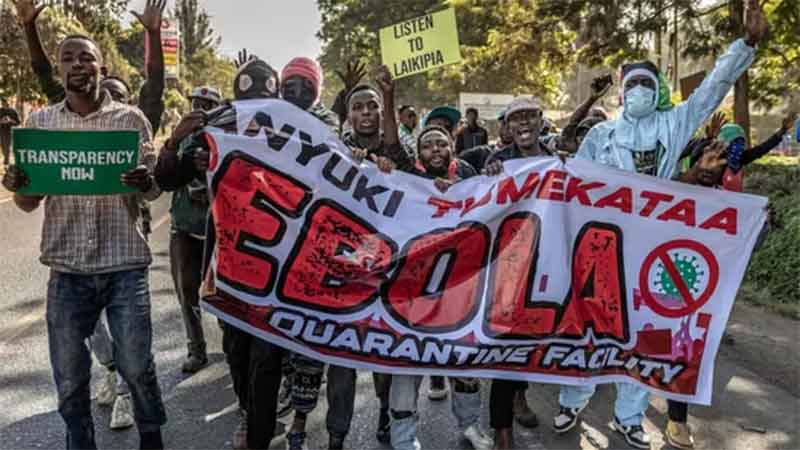
A proposed U.S.-funded Ebola quarantine facility in Kenya has sparked protests, legal challenges and a wider debate over transparency, sovereignty and public trust. Busani Ngcaweni argues that the controversy reflects deeper concerns about governance, economic insecurity and the relationship between citizens and the state. Drawing on the idea of narrative economics, the article examines how repeated cycles of protest and official responses shape public perceptions and economic confidence. It also places Kenya’s experience in a broader African context, highlighting how trust, accountability and institutional responsiveness influence both political stability and economic outcomes.
In an historic victory for the working class — one that will have a political impact on the upcoming national election — Brazil’s chamber of deputies voted to end the odious “6×1” work week, writes Israel Dutra.
India’s pastoralist communities sustain livestock economies, conserve indigenous breeds, and steward vast rangeland ecosystems, yet they remain largely invisible in policy. This article examines how historical discrimination, shrinking grazing commons, weak implementation of legal protections, and the absence of a national commons policy continue to undermine pastoral livelihoods. While a few states have taken steps to recognise migration routes and grazing rights, most pastoralists still face barriers to mobility, land access, and official recognition. As the International Year of Rangelands and Pastoralists unfolds, the article argues that meaningful policy action is urgently needed.
Hugh J Curran examines how colonial rule continues to shape political instability, economic dependency, and environmental crises across African nations. Focusing on the Sahel, Sudan, Congo, and Nigeria, the article traces how European powers extracted resources, deepened ethnic and regional divisions, and left behind fragile states vulnerable to conflict and foreign intervention. It also explores contemporary struggles involving terrorism, climate change, militarization, and global competition for Africa’s minerals. At the same time, the article highlights local resilience, ecological restoration efforts such as the Great Green Wall Initiative, and the aspirations of African societies seeking development beyond the legacy of colonial exploitation.