
Although I expected the war on Iran to be a disaster, I didn’t expect the Trump administration to be implicitly conceding defeat after barely a month. Yet that’s where we are:
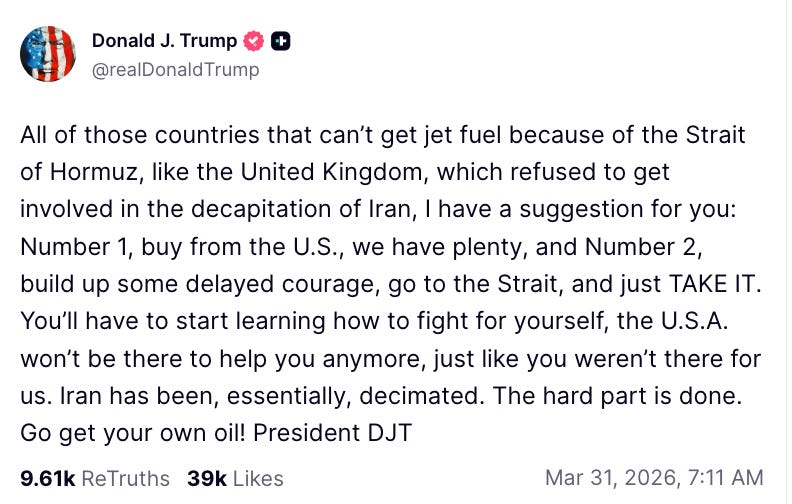
The stock market has soared on the news of potential U.S surrender, which tells you something about how the war is going. Unfortunately, declaring victory and running away will be a lot more difficult than Trump thinks. For one thing, thousands of U.S. ground troops are on their way to the Persian Gulf, and it will be very hard to avoid succumbing to the temptation to use them, at which point we will have entered what Robert Pape calls the “escalation trap.”
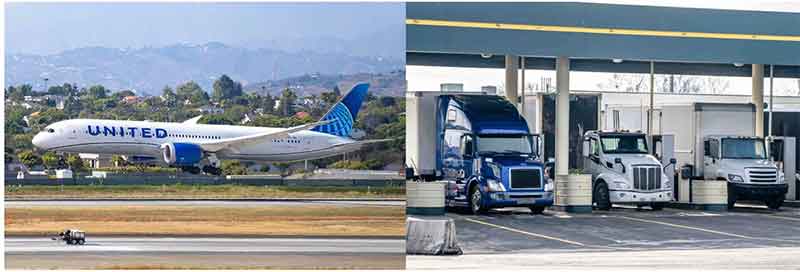
At the same time, Trump’s claim that the blockade of the Strait of Hormuz is other countries’ problem is whistling in the dark. Trump is telling Europeans that if they lack the “courage” to seize the jet fuel they need — funny how the vastly larger U.S. military isn’t doing the job — they can just “buy from the U.S., we have plenty.” Here’s what has happened to the average price of jet fuel at major U.S. airports:
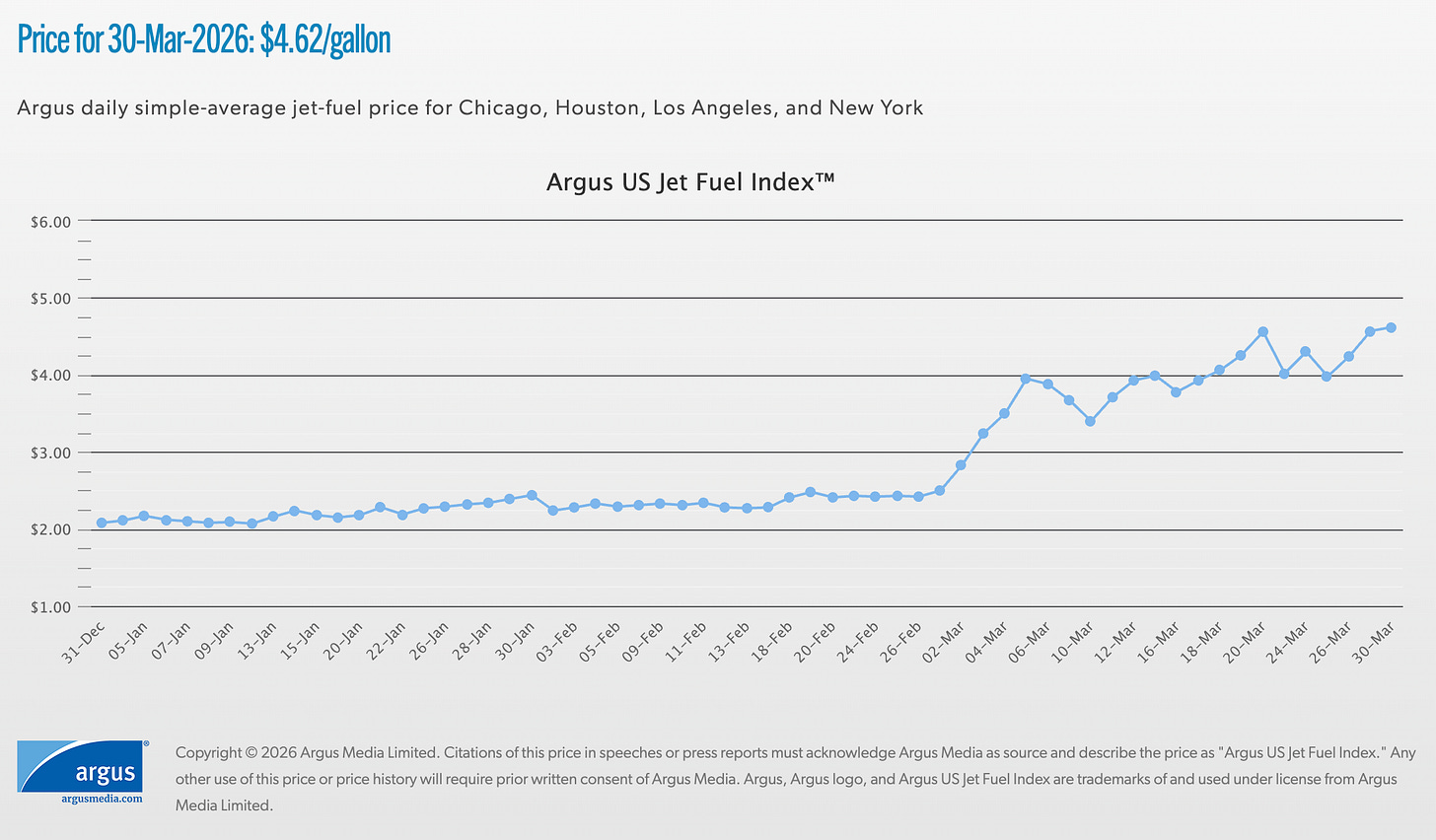
Does this look to you as if we have “plenty”? It doesn’t look that way to airline executives:

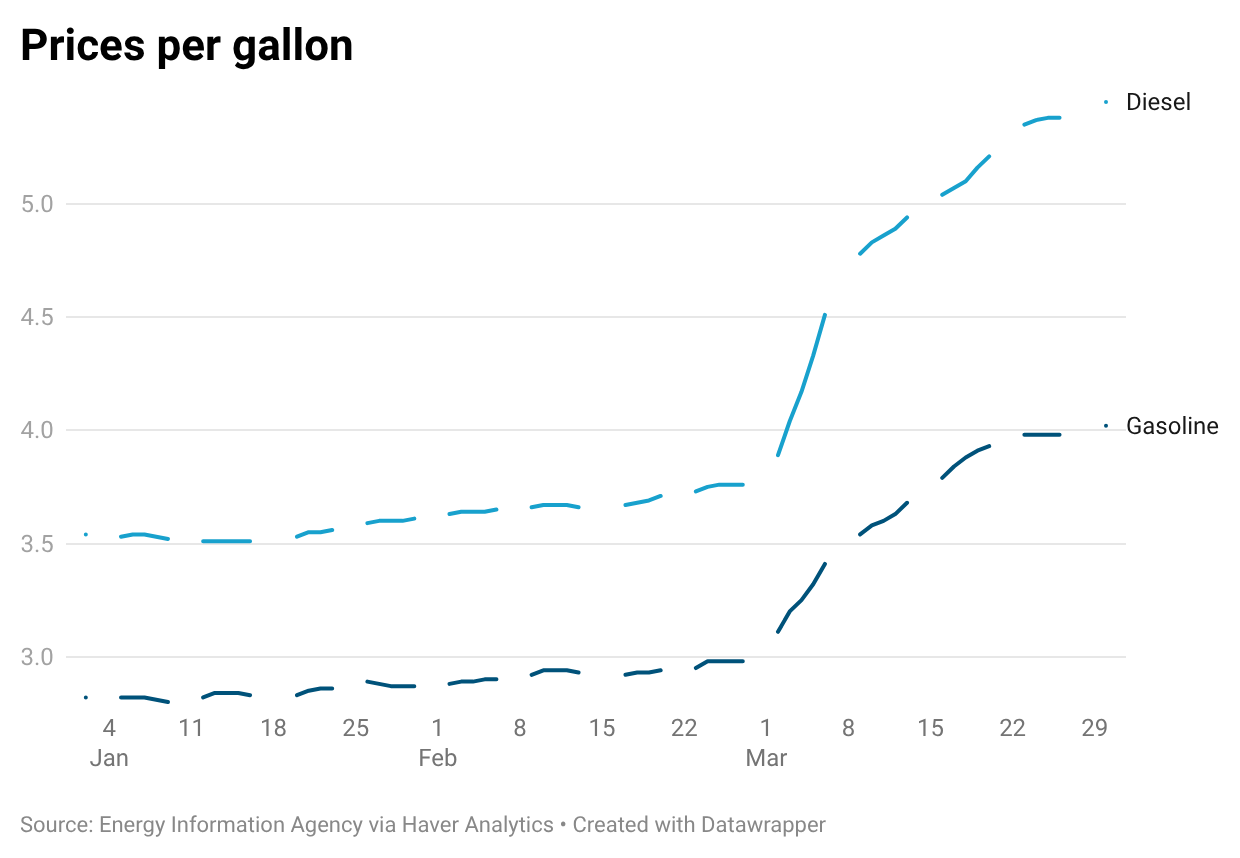
The reality is that U.S. prices of petroleum distillates and other products in which Persian Gulf nations are key producers have soared. The rise in gasoline prices, for which the national average just hit $4 a gallon, has made headlines. But other prices are also hugely important.
Most non-electric cars run on gasoline, but most trucks are fueled with diesel. And diesel prices are up even more than gasoline prices — approximately $1.70 per gallon as opposed to $1:
The feedstocks for fertilizer are largely manufactured from natural gas, and Persian Gulf nations were major producers, shipping their production out through the Strait of Hormuz, before the war. Here’s what has happened to the price of urea:
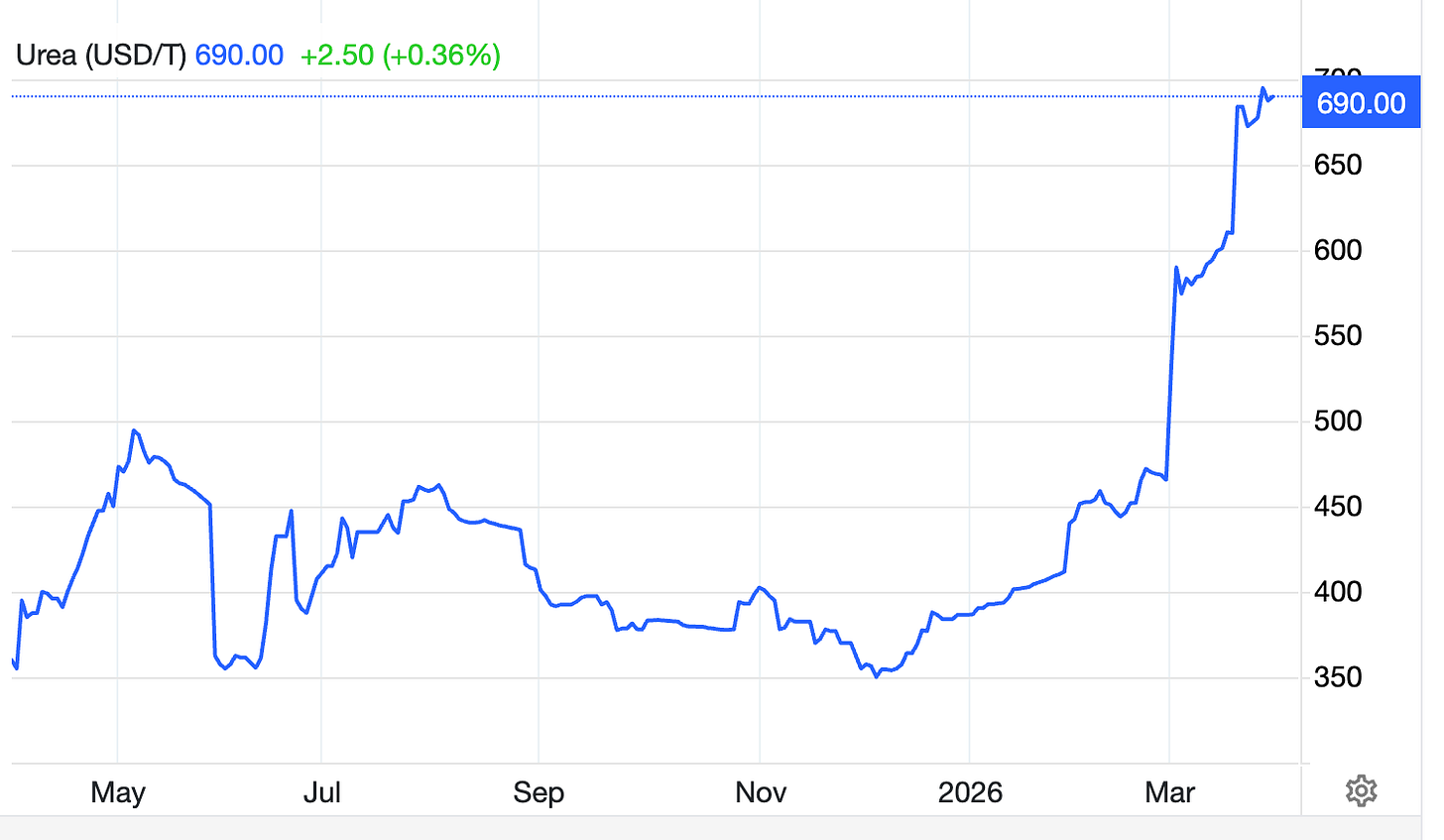
Source: Trading Economics
And where do you think plastic comes from? Here’s the price of polyethylene:
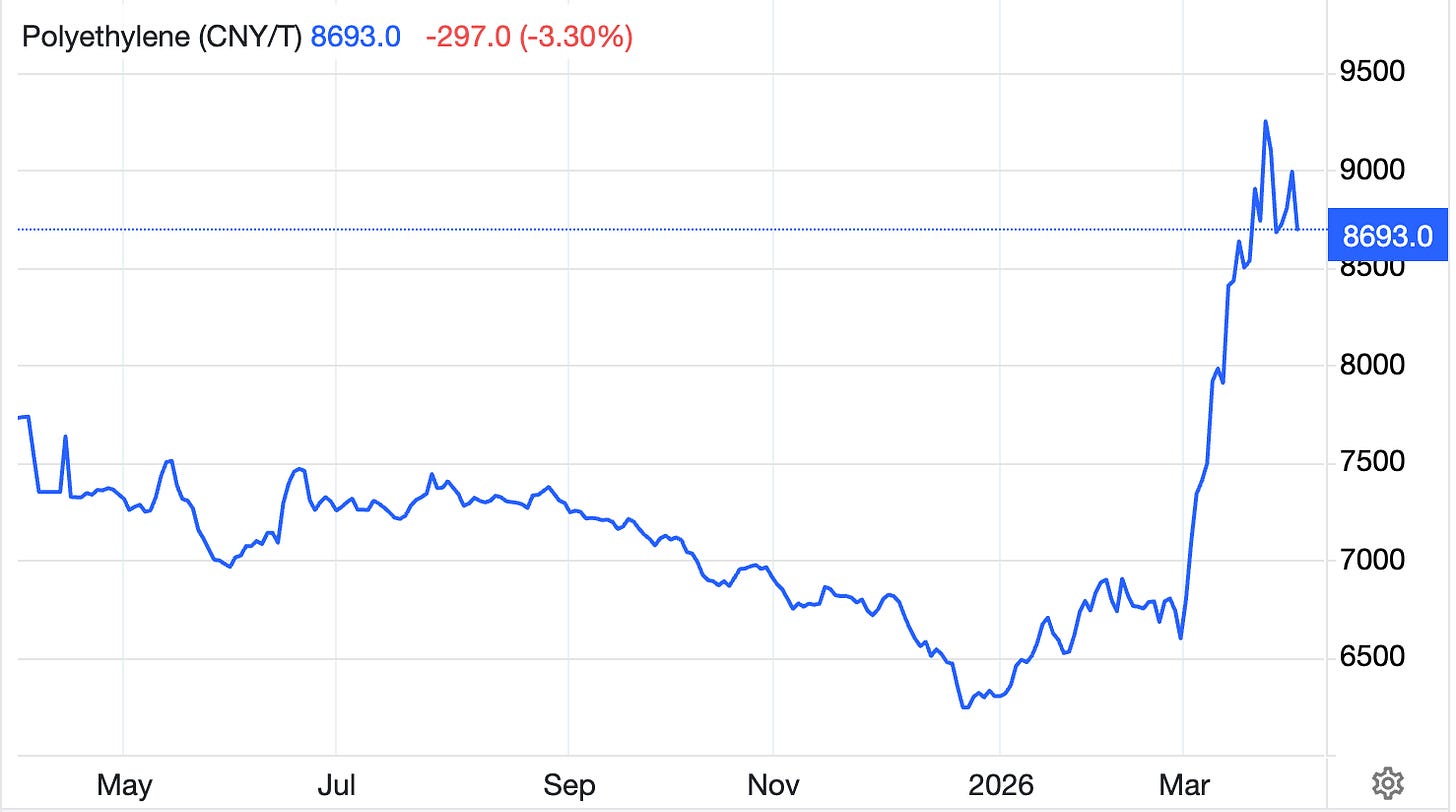
Source: Trading Economics
How important are these non-gasoline price shocks? The Energy Information Administration has a useful chart — the data are for 2022, but the numbers will look similar for the eve of the Iran War:
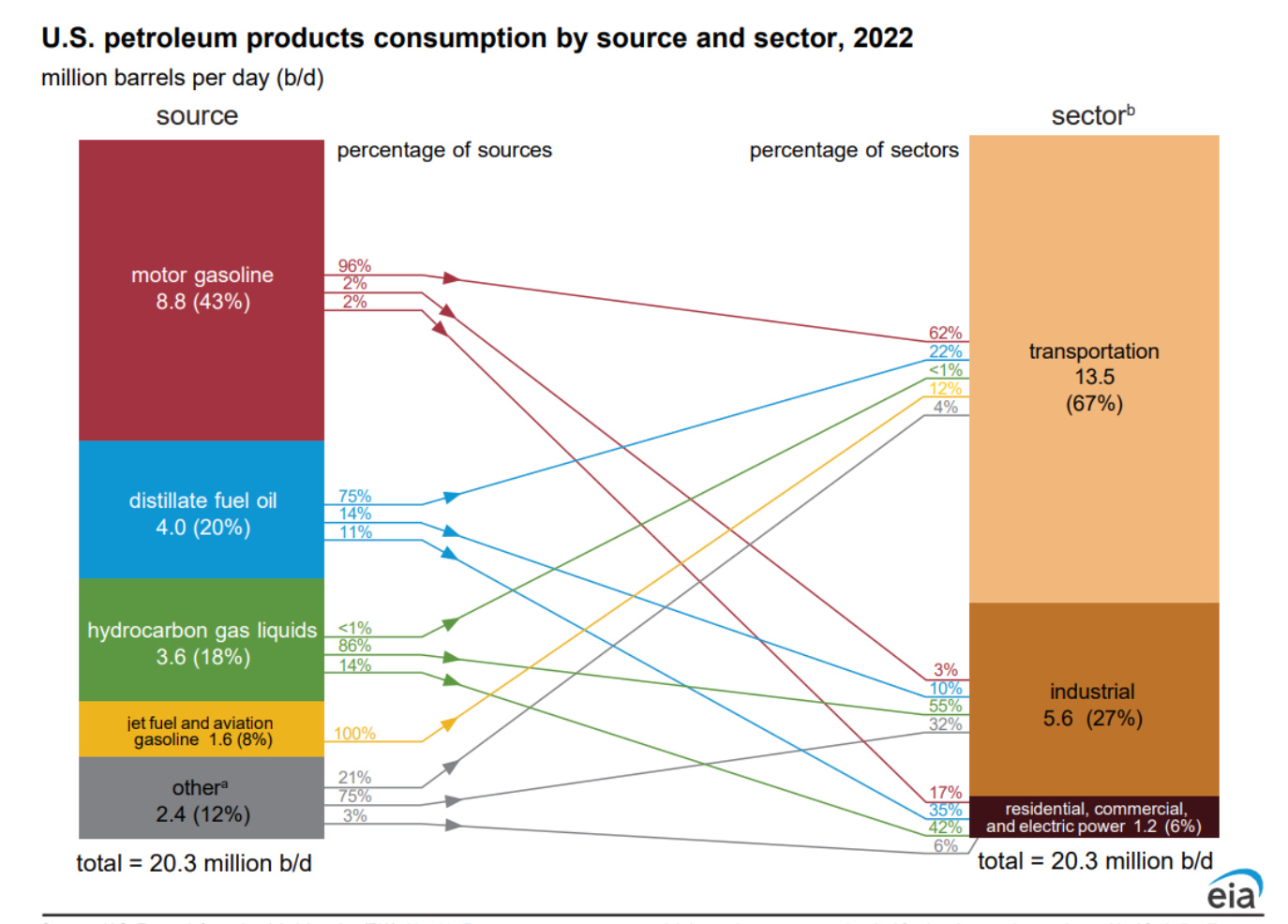
Less than half of U.S. consumption of petroleum products was gasoline. And the price of distillate fuel oil — mostly diesel — is up about 70 percent more than the price of gasoline. Add in soaring costs for fertilizer and feedstocks for plastic, and the surge in gas prices, even though it dominates headlines, is well under half of the economic story.
And who pays the higher prices of diesel, jet fuel, fertilizer and plastics? The answer is that these show up initially as costs to producers but will quickly be passed on to consumers in the form of higher prices for shipping and, indirectly, almost everything you buy.
How big is the non-gasoline price shock? We consume around 4 million barrels of diesel a day, which is about 60 billion gallons per year (there are 42 gallons per barrel.) The price of diesel is up $1.70 a gallon, so if prices were to stay at current levels, that alone would be a roughly $100 billion hit to consumers. Substantial additional hits will come from higher prices of jet fuel, fertilizer and petrochemicals.
And, of course, gasoline has gotten a lot more expensive too. Do you still think that the Strait of Hormuz is other countries’ problem?
Now, America produces a lot of oil, and the domestic oil industry will be earning large windfall profits even as U.S. consumers suffer. But so what? We don’t have any mechanism in place to capture and redistribute those windfall gains, so ordinary U.S. families will bear the full brunt of the global oil shock even though America is a net oil exporter.
There’s an additional, technical but important reason to be even more worried about soaring prices for diesel, jet fuel and industrial materials than about gasoline prices. It involves how the Federal Reserve is likely to react.
The Fed normally bases its decisions about whether to reduce or increase interest rates on “core” inflation — inflation excluding food and energy prices. The reason it does this is that food and energy prices are highly volatile and are usually a poor indicator of what inflation will be over the next few years. So the Fed tries to “look through” inflation fluctuations driven mainly by the prices of groceries and gasoline. For example, it didn’t raise rates in 2011, when there was a temporary uptick in inflation driven entirely by oil prices.
There is a major debate among monetary policy experts about whether the Fed can safely focus only on core inflation and look through the inflationary effects of the Hormuz blockade, which if unresolved will be the worst energy crisis in history. In any case, however, core inflation only excludes energy directly purchased by consumers. Oil-related price shocks such as soaring jet fuel and diesel prices, which raise the cost of doing business, aren’t excluded, which means that they will increase the Fed’s preferred measure of inflation. This will push the Fed toward raising interest rates or at least holding off on rate cuts.
The Fed could, in principle, try to look through the effects of the Strait crisis on business costs as well as direct effects on consumer prices. But given how nervous everyone is about the risk of 70s-type stagflation, it probably won’t.
So the diesel/jet fuel/plastics shock will lead, other things equal, to a more hawkish Fed — and an elevated risk of recession.
The moral here is that the United States retains a vital interest in seeing the Strait of Hormuz reopened. Much as Trump would like to declare victory and insist that the blockade is other countries’ problem, reality won’t oblige him.
MUSICAL CODA