
Life in the remote villages of Ghatol block in Banswara district of Rajasthan has never been easy. Water scarcity, lack of employment, inadequate education, and the burden of old social traditions have persisted for generations in these villages nestled in the hilly areas. But amid these challenges, some women have emerged who have not only transformed their own lives but have also become a source of inspiration for the entire community. These are the stories of women who, without formal education and despite lack of resources, ignited the spark of change in their villages.
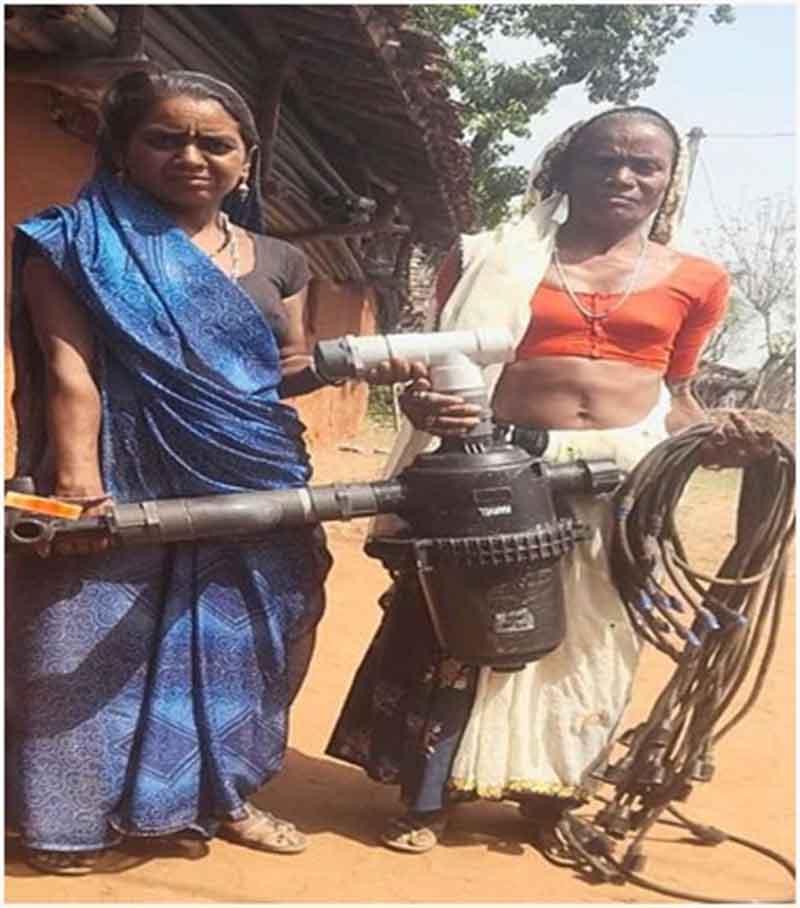
Indra Devi’s story is one of water and dignity. Forty-five-year-old Indra is now a well-known name in Goj Rathore village, but her journey began from a very ordinary start. Indra Devi is a farmer, and farming in a hilly area like Ghatol was no less than a struggle. Farmers yearning for every drop of water, dry land, and low yields despite hard work this was the reality around her. But when she joined Vaagdhara’s Gram Swaraj group and learned about government schemes, and heard about the Pradhan Mantri Krishi Sinchayee Yojana for the first time, she saw the possibility of change.
This scheme was not just a paper promise it provided drip and sprinkler irrigation systems to marginal farmers, which conserved water and increased crop productivity. When a government official called Indra for the first time, she was skeptical. She couldn’t believe that the government was talking to her. But a field worker from Vaagdhara recognized her potential and encouraged her. With the help of the Gram Sevak, she started the work. First ten families, then twenty, fifty, hundred and to date, she has helped more than two hundred and fifty families benefit from this scheme.
Indra’s role was not limited to just filling forms. She herself goes to the government office located at Roopji ka Kheda to bring application forms, returns to the village to explain to people how to fill the forms, gets Aadhaar cards linked to mobile phones, gets OTP verification done, and coordinates with banks. Many times she even pays for petrol from her own pocket so that she can take people to the office. Each farmer receives a set of seven hundred feet of drip pipes and forty sprinkler heads, and Indra organizes training sessions outside her home where people are taught how to install the system and maintain it.
Despite not being a technical expert, Indra herself provides guidance in minor problems, which has increased people’s trust. Today, people in the village respectfully call her ‘Didi’. But her contribution extended beyond irrigation. She connected villagers to vermi-compost and better seeds through Vaagdhara. The biggest achievement came when she organized women and demanded water infrastructure. Through collective efforts, hand pumps were installed in 2019, freeing the women of Goj Rathore from having to walk a kilometer every day to fetch water.
This journey was not easy. In the beginning, people gossiped. Her husband also objected to her going out and removing the veil. But gradually, when results started showing, the opposition decreased. Today, her husband proudly supports her. At Vaagdhara’s 2025 Delhi Swaraj Samvad, Indra spoke on the microphone for the first time and sang in front of a crowd. This experience was a symbol of self-respect and recognition for her.
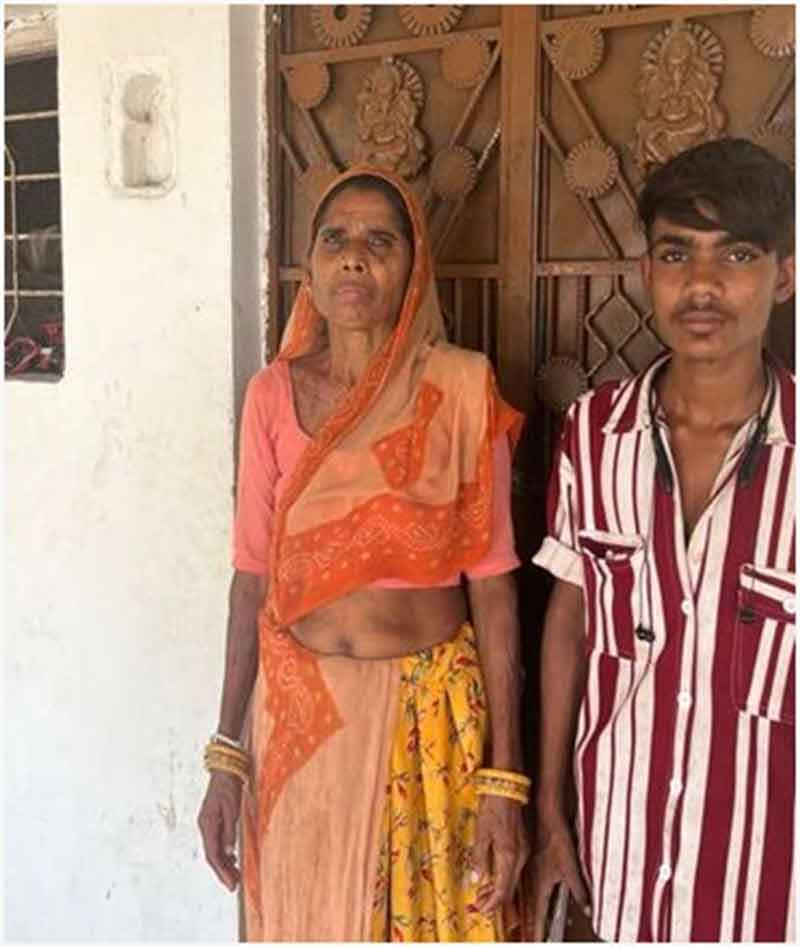
Meera Devi’s story is one of determination. Meera, a resident of Jajor Kanta village, has been farming for the past three decades. Born into poverty, Meera lost her mother in childhood, so she never got the opportunity to go to school. She started farming at a very young age and remained connected to her village throughout her life. Now in her mid-fifties, Meera lives with two grandchildren. Her son died years ago due to alcohol addiction. After her son’s death, her daughter-in-law returned to her maternal home and has had no contact with the family since. This made it difficult for Meera to avail government schemes, as many schemes require the consent or thumbprint of the children’s mother.
Understanding government procedures is not easy for anyone, especially for someone who never learned to read or write. But Meera did not give up. She slowly learned how to obtain necessary documents like Aadhaar card and ration card, how to bring forms from the tehsil office, and how to get signatures from the local sarpanch. The knowledge she acquired through struggle, she now shares with other people in her village. She goes door-to-door explaining to families about necessary documents and procedures in simple language. Although she could not help her grandson avail the Palanhar scheme due to her daughter-in-law’s absence, she continues to make efforts for other children.
Recently, she helped a family whose children had lost their father to suicide. With Meera’s guidance, that family received the benefits of the Palanhar scheme and the children started receiving regular assistance. Through word of mouth and community participation, Meera has become a strong link of the Palanhar scheme in her village. Her vocal leadership ensures that the vulnerable and needy children of the village are not forgotten. This work, inspired by her life experience and compassion, is helping government assistance reach those children who need it most.
Taku Devi’s story is one of seeds and tradition. Fifty-five-year-old Taku lives with her husband Lalu Ram and son Sunil. Like many women in this region, her life was earlier limited to household responsibilities and subsistence farming. But today she is known as a custodian of indigenous seeds and a strong voice for traditional agriculture. Taku’s journey began in 2019 when she joined Vaagdhara’s Saksham group. Through regular meetings and discussions, she understood the importance of traditional farming, indigenous seeds, and biodiversity conservation. These learnings touched her heart as it gave her a sense of connection with her ancestors’ farming traditions and knowledge. Over time, she also became an active member of the Farmer and Tribal Swaraj Organization.
After gaining new confidence, Taku started collecting and preserving indigenous seeds like wheat, maize, kuri, kodra, kang, and other millets that her family had been growing for generations. Initially, she obtained seeds from her family elders. Later, through Vaagdhara, she also received new varieties which she successfully grew on her land. She carefully stores these seeds at home and uses them every year, maintaining their continuity. Along with farming, Taku has planted ten to fifteen types of fruit-bearing plants around her house, including mango, guava, and lemon. Recently, she cultivated Green gram and earned about twenty thousand rupees, which is a significant contribution to her family’s income. Excess grain and produce are either sold in the local market or shared with other women in the village. Most importantly, Taku does not keep this knowledge limited to herself. She also shares her learnings with women who cannot attend group meetings and encourages them to adopt indigenous seeds and practice traditional farming. Through her efforts, she is contributing to reviving biodiversity, improving nutrition, and strengthening livelihoods one seed at a time. Taku’s story reminds us that when women receive knowledge and community support, they become powerful carriers of sustainable change for their families and villages.
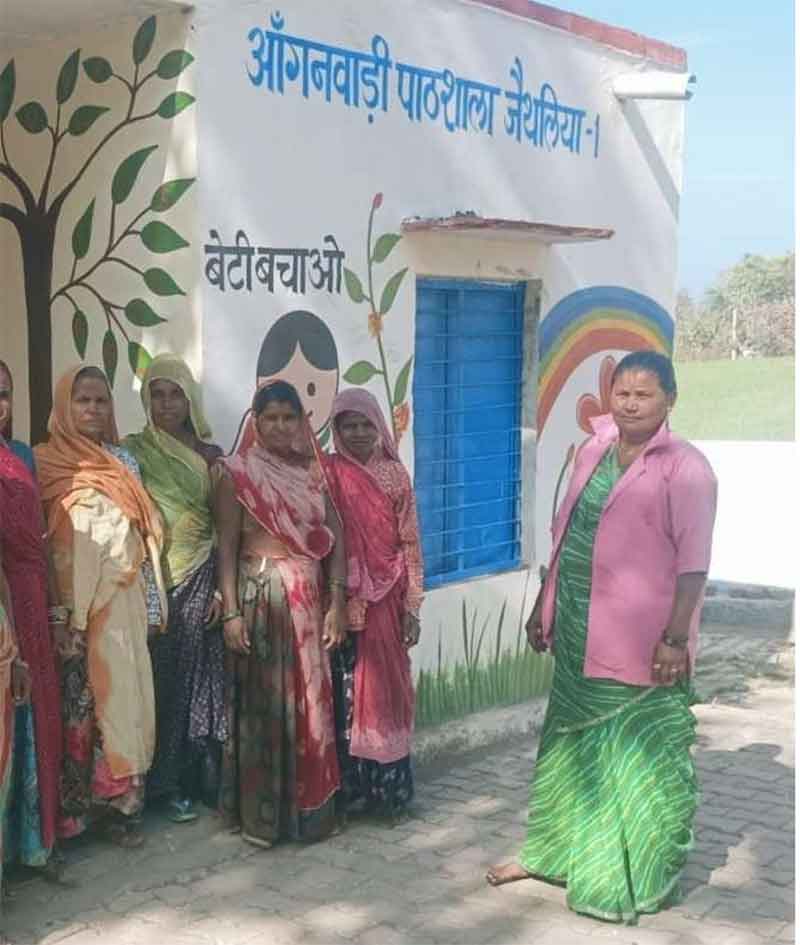
Mani Devi’s story is one of courage and social change. Her childhood was spent in Jethalia village, where the future of girls was decided very quickly. Most girls were married before becoming adults, were taken out of school, and burdened with responsibilities they had never chosen. For years, this was considered normal, but Mani decided to challenge it. Her journey began when she joined Vaagdhara and started attending meetings of the Krushi avm Aadivasi Swaraj Sagthan There, she gained confidence to speak openly about child rights, laws against child marriage, and social issues. Listening to women from other villages, she believed that change was possible even in her own community.
When Mani first raised her voice against child marriage and untouchability, villagers and relatives reacted with disbelief and opposition. But she continued her calm and persistent efforts. Gradually, her confident voice began to influence others as well. A turning point came when she learned that a thirteen-year-old girl in her village was going to get married. Mani went directly to that family and explained to them the legal, health, and social consequences of child marriage. When the family did not listen, she sought cooperation from the panchayat and informed Childline. The marriage was stopped, and this was the first such successful intervention in the village. After this, Mani did not back down. She intervened in more cases, physically stopped wedding ceremonies when necessary, and contacted the police with Vaagdhara’s support. So far, she has successfully prevented more than five child marriages. Gradually, through her efforts, a collective understanding developed in the village that child marriage is harmful and illegal.
Mani soon realized that to prevent child marriage, it was necessary to keep girls in school. She went door-to-door in her village and surrounding areas, especially meeting families where girls had dropped out of school due to migration or economic pressure. She encouraged parents to send their daughters back to school, saying that if girls are educated, their future will be better and the village’s future will also be better. Many families listened to her. Many girls returned to school, and some families even stopped migrating for work. Today, parents openly acknowledge her role, saying that because of Mani, their daughters are studying again.
Using her role as an Anganwadi worker, Mani also strengthened health and nutrition services in Jethalia. With Vaagdhara’s support, she ensured timely care for pregnant women and newborns, organized vaccination and nutrition check-up camps, and promoted nutrition gardens with indigenous plants. She personally supervised the Anganwadi kitchen so that children could get clean and nutritious food, and organized regular awareness sessions for mothers. From challenging deep-rooted social norms to ensuring education, health, and dignity for girls, Mani’s journey shows how a determined woman with collective support can transform an entire community.
Although different, these women’s stories reflect the same truth—when women receive the right platform, knowledge, and community support, they can not only transform their own lives but also give a new direction to the entire society. Indra turned the water crisis into an opportunity, Meera made her grief a means to help others, Taku gave new life to old seed traditions, and Mani raised her voice against social evils. These women were not educated from any book, but life taught them lessons that cannot be found in any classroom.
The role of like Vaagdhara has also been important in these stories. These organizations not only provided information to women but also provided them a platform where they could raise their voices, share their experiences, and learn from each other. Through women’s empowerment groups, Farmer and Tribal Swaraj Organization, and regular meetings, these women gained that confidence. Today these women are carriers of change. They are leading in their villages, inspiring others. These extraordinary journeys remind us that change does not come from far awayit emerges from among us, from ordinary people who show extraordinary courage.