Welcome to our in-depth exploration of degrowth. In a world shaped by economic systems, our articles delve into the intersection of green politics, degrowth, and anti-capitalist principles, providing a unique perspective on reshaping economic paradigms.
Our articles offer a green perspective on degrowth, examining how it aims to redefine success beyond mere GDP growth and advocates for a sustainable, balanced approach to resource allocation.
Discover how anti-capitalist ideals align with the Green vision for an economic system that prioritizes people and the planet over profit. We explore the complexities of dismantling the current economic framework and replacing it with one that emphasizes social justice, environmental sustainability, and community well-being. Navigate through insightful articles that unpack the strategies proposed by green political movements to reduce the size of the military-industrial complex.
Together, let’s envision and advocate for a future where economic prosperity is intertwined with social and ecological well-being.
Raoul Peck’s ‘Lumumba’ offers a restrained and politically significant remembrance of Patrice Lumumba, the first Prime Minister of the Democratic Republic of Congo. Vidyarthy Chatterjee examines Lumumba’s assassination in the context of the struggle over Congo’s mineral wealth, sovereignty and political future. The article discusses the role of Western powers, Belgian colonial interests and Congolese political elites in the events that led to Lumumba’s death. It also considers how Peck’s film revisited this history during the Black Lives Matter movement, bringing renewed attention to colonial violence and the continuing economic and political pressures faced by former African colonies.
India’s constitutional democracy recognizes Adivasi or tribal communities as distinct social formations having special rights over land and forests. Ironically, some of the country’s richest tribal landscapes continue to be viewed as repositories of mineral wealth. Whenever coal, bauxite, iron ore, or other natural resources are discovered beneath forests inhabited by Scheduled Tribes, the language of development takes precedence over the language of constitutional justice.
Commerce and Industry Minister Piyush Goyal’s target of 10 million medical tourists a year won’t create new capacity in Indian healthcare, it will pull capacity out of a public system that’s already short on it
As wars, extreme weather, fuel shortages and rising electricity demand strain aging power systems, decentralized energy is gaining importance. Solar panels, batteries, smaller generators and microgrids can reduce dependence on vulnerable centralized grids and help maintain essential services during disruptions. In Ukraine, distributed systems are supporting hospitals and water infrastructure amid attacks. Puerto Rico is integrating household batteries into its grid, while Cuba is expanding solar generation as fuel shortages deepen. These experiences show both the potential and limitations of decentralized energy. Scaling remains difficult, but localized generation and storage are emerging as practical tools for improving resilience in increasingly insecure energy systems.
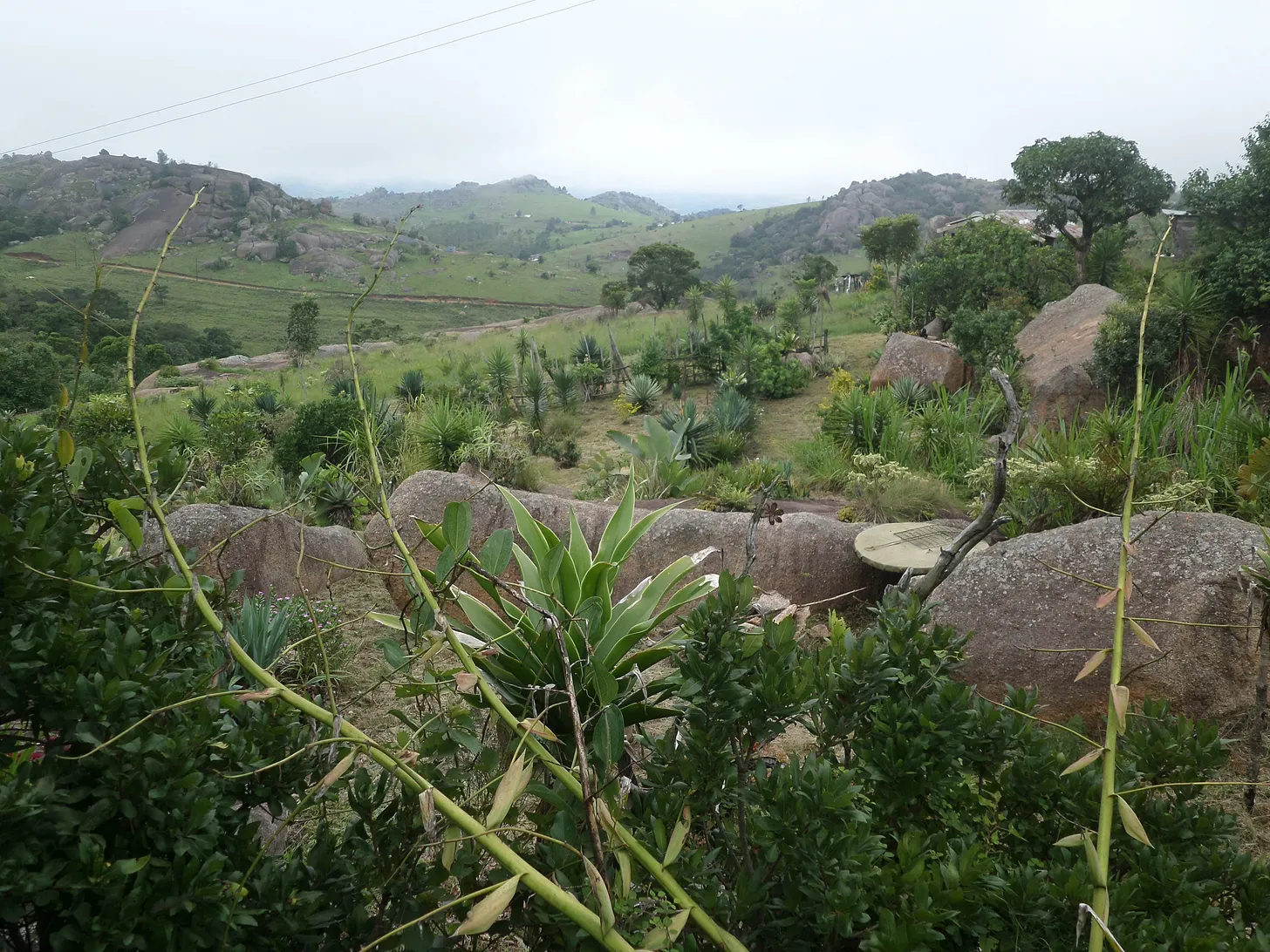
In the mountains of Eswatini, Warren has built a garden around indigenous plants, permaculture and local ecological knowledge. But the landscape he has carefully cultivated is facing a changing climate. He has witnessed heavier and less predictable rains, flooding, soil erosion, crop failures and the spread of invasive species. His response combines practical adaptation with conservation: cultivating native plants, restoring degraded land, reducing invasive wattle, reusing waste and producing organic compost. Working with like-minded neighbours, Warren hopes to develop a nature reserve around Sibebe Rock. His experience offers a grounded account of grassroots climate adaptation and the challenges of building resilience in a vulnerable rural community.
Javier Milei’s government has faced setbacks both in the streets and in Congress over its plans to liberalize foreign ownership of land and weaken environmental protections. Mass protests against the proposed land law were met with police repression, while the government failed to secure enough parliamentary support to pass key provisions as presented. The article examines these developments as signs of growing resistance to austerity, privatization and the transfer of control over Argentina’s land and resources. It also explores the role of sovereignty, the Malvinas issue and football in popular political consciousness, and the challenge of turning street mobilization into sustained political organization.
Climate communication has often emphasized hope, success and the possibility of staying within the 1.5°C threshold. Theresa Leisgang and Gerriet Schwen argue that this approach can obscure the severity of the climate crisis. Drawing on climate science, research and conversations with scientists, journalists and activists, they examine the growing evidence of ecological and social breakdown and the limits of optimistic narratives. They call for more honest communication about climate overshoot, systemic risks and the possibility of profound disruption. Rather than abandoning action, they argue for a form of hope grounded in realism: acting to protect life, prepare for crises and pursue meaningful gains even when outcomes remain uncertain.
Berry didn’t exempt himself from this critique of the destructive habits that draw down the ecological capital of the planet: “I am … still in bondage to the automobile industry and the energy companies, which have nothing to recommend them except our dependence on them. I still fly on airplanes, which have nothing to recommend them but speed; they are inconvenient, uncomfortable, undependable, ugly, stinky, and scary. I still cut my wood with a chainsaw, which has nothing to recommend it but speed, and has all the faults of an airplane, except it does not fly.”
Transcript of my interview with Kohei Saito on 1 st September, 2023 on the occasion of the 9th International Degrowth Conference in Zagreb. This interview was originally published in Czech in Alarm, a Czech left-wing online magazine, on 28 September 2023. This is the first English publication of the full transcript, approved by Kohei Saito.