
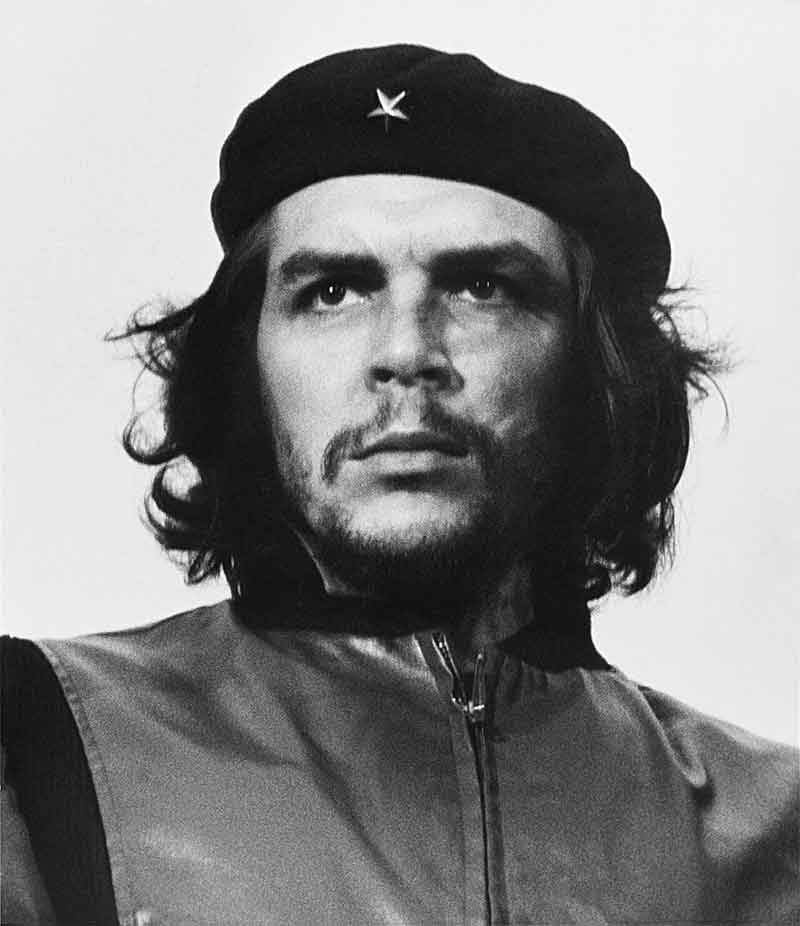
In 1952, Ernesto Guevara was a 23-year-old medical student from Argentina with an appetite for adventure, a restless curiosity and a battered Norton 500cc motorcycle. His friend Alberto Granado, a 29-year-old biochemist, was his companion on a journey that would take them across much of South America.
Neither could have known that the journey would become one of the formative experiences in the making of one of the 20th century’s most recognisable revolutionaries.
The Motorcycle Diaries is ostensibly the memoir of a young man’s travels. But beneath its descriptions of landscapes, people and adventures lies something more consequential: the transformation of a privileged and curious young man into someone increasingly convinced that poverty, exploitation and social injustice were not isolated misfortunes but products of an unequal social order.
The journey helped shape the political imagination of the man who would later become known to the world simply as Che.
A Journey Beyond the Map
Guevara and Granado set out on the unreliable 1939 Norton, which they called La Poderosa II — “The Mighty One II.” Their planned journey eventually covered more than 14,000 kilometres, taking them through Argentina, Chile, Peru, Colombia and Venezuela.
The motorcycle broke down early in the journey. What might have been an inconvenience for ordinary travellers became, in retrospect, an important part of Guevara’s experience. The two young men were forced to depend on hitchhiking, walking, cargo boats and the hospitality of strangers.
Freed from the insulating comfort that might have accompanied a conventional journey, Guevara increasingly encountered people living at the margins of society.
The landscapes changed, but poverty remained a recurring presence.
In the Andes, he saw Indigenous communities living in conditions sharply at odds with the grandeur of the civilisations that had preceded them. The historical splendour of places such as Machu Picchu existed alongside the dispossession and poverty of Indigenous people.
In Chile’s Atacama Desert, Guevara encountered a persecuted communist couple who were struggling to survive while working under harsh conditions at the Chuquicamata copper mine. The mine, associated with foreign corporate interests, exposed him to the relationship between natural resources, foreign capital and the lives of workers.
These encounters gradually altered the way he looked at the continent.
Medicine, Poverty and Human Dignity
The experience at the San Pablo leper colony in the Peruvian Amazon was particularly significant.
Guevara worked with patients and witnessed not only the suffering caused by disease but also the social isolation imposed upon those affected. The experience challenged the boundaries between medicine and politics.
Disease could be treated as a biological problem. But the poverty, exclusion and indignity surrounding it could not be understood simply through medicine.
The young doctor increasingly saw suffering as something connected to the social environment in which people lived.
The transformation was therefore not instantaneous. Guevara did not return to Argentina as a fully formed revolutionary. But he returned as a different person.
He himself later reflected on this transformation:
“The person who wrote these notes died the day he stepped back on Argentine soil; the one who gathers and polishes them, ‘I,’ is no more me.”
The statement captures the significance of the journey. The motorcycle trip did not create Che Guevara’s revolutionary politics by itself. But it provided experiences that profoundly influenced the worldview from which those politics would later emerge.
From National Borders to a Continental Identity
Perhaps the most important political consequence of the journey was Guevara’s growing sense that Latin America could not be understood simply as a collection of separate nations.
The poverty he encountered crossed national boundaries. So did exploitation, discrimination and foreign economic influence.
The journey therefore contributed to a Pan-Latin American consciousness. Guevara increasingly saw the continent as sharing a common historical experience and facing common economic and political structures.
This would become central to his later revolutionary thinking.
For Guevara, liberation could not ultimately be reduced to changing governments one country at a time. The struggle had to be understood in continental and anti-imperialist terms.
The young traveller who had set out looking for adventure was beginning to see a political geography beneath the physical geography of South America.
From Observation to Revolution
The Motorcycle Diaries does not contain the mature political doctrine of Che Guevara. That came later, after his experiences in Guatemala, Mexico and, most decisively, Cuba.
Yet the memoir contains the early foundations of his transformation.
Guevara moved from observing injustice to asking what could be done about it. That movement — from compassion to political action — became central to his revolutionary life.
His encounter with poverty convinced him that individual charity and professional service were insufficient responses to systemic inequality. He increasingly believed that the structures producing exploitation had to be confronted.
The Cuban Revolution provided the decisive historical experience through which these ideas were converted into revolutionary strategy.
And from that experience emerged what became known as foco theory.
The Foco: Creating the Conditions for Revolution
Foquismo, or foco theory, was associated principally with Guevara and was later given a more systematic theoretical formulation by French intellectual Régis Debray in his 1967 work Revolution in the Revolution?
The basic proposition was radical.
A revolution did not necessarily have to wait for favourable “objective conditions” to emerge. A small, disciplined and committed group of guerrillas could initiate armed struggle in the countryside and, through its example and military successes, help create the conditions for a wider revolutionary movement.
The guerrilla foco was therefore conceived not merely as a military unit but as the nucleus around which a revolutionary movement could grow.
This represented a significant departure from classical Marxist-Leninist approaches, which generally placed considerable emphasis on political organisation, mass consciousness and the development of a disciplined revolutionary party.
Guevara believed that revolutionary action itself could accelerate political consciousness.
The Countryside as the Battlefield
Foco theory placed particular emphasis on the rural countryside.
Mountains, forests and remote areas offered guerrillas advantages against a conventional army. A small force could move rapidly, avoid direct confrontation with superior military forces and establish relationships with rural communities.
The guerrillas would not simply fight. They were expected to demonstrate through their conduct that another social order was possible.
Land reform, healthcare and assistance to local communities could help establish popular support.
The countryside, in this conception, became the laboratory of revolution.
The theory also gave the armed revolutionary organisation an unusually prominent political role. Rather than waiting for a fully developed revolutionary party to organise the armed struggle, the guerrilla foco itself could become the nucleus of the revolutionary leadership.
The battlefield was therefore also the political school.
Cuba: The Revolution That Made the Theory
The Cuban Revolution between 1956 and 1959 became the historical foundation for foco theory.
In December 1956, Fidel Castro, Che Guevara and their companions landed in Cuba aboard the Granma. The expedition was devastated by an army attack. Only a small number of fighters survived and reached the Sierra Maestra.
From this tiny force emerged the guerrilla movement that eventually helped overthrow Fulgencio Batista.
The rebels conducted hit-and-run operations against government forces while building relationships with sections of the rural population. The movement expanded, while Batista’s regime increasingly lost political legitimacy.
Radio Rebelde helped carry the revolutionary message beyond the mountains.
By 1958, the military and political balance was shifting. Guevara’s campaign culminating in the Battle of Santa Clara became one of the decisive episodes of the revolution. Batista fled Cuba on January 1, 1959.
To Guevara and the Cuban leadership, the lesson seemed clear: a relatively small revolutionary force could initiate a process that eventually developed into a nationwide uprising.
The Cuban experience encouraged them to believe that the model could be reproduced elsewhere.
History would prove much less accommodating.
The Revolution Leaves Cuba
After 1959, Guevara increasingly saw revolutionary struggle as an international and anti-imperialist project.
The Cuban leadership sought to support revolutionary movements beyond the island. Guevara himself became directly involved in revolutionary efforts abroad.
But the conditions that had existed in Cuba could not simply be transported to other countries.
The first major failure came in the Congo in 1965.
Guevara travelled there to assist anti-imperialist forces, including those associated with Laurent-Désiré Kabila. The campaign encountered deep internal divisions, weak political organisation, inadequate coordination and serious cultural and linguistic barriers. Most importantly, the guerrilla force failed to develop the local popular support necessary for sustained revolutionary warfare.
Guevara eventually recognised the campaign as a failure.
The experience should have raised fundamental questions about the universal applicability of the foco model.
Instead, Bolivia became the next and final major test.
Bolivia: The Limits of the Foco
In 1966, Guevara entered Bolivia and established a guerrilla force in the Ñancahuazú region.
The conditions were dramatically different from those of revolutionary Cuba.
The local peasantry did not respond to the guerrillas as Guevara had hoped. Many regarded the fighters as outsiders. The Bolivian government had already implemented land reforms, weakening one of the potential foundations for a guerrilla appeal based on agrarian grievances.
The Bolivian Communist Party also failed to provide the political support Guevara expected.
The guerrillas became increasingly isolated.
The Bolivian military, with US assistance including CIA involvement, gradually tracked and contained the group.
Guevara’s diary entries from the campaign reveal the growing desperation of a force struggling to find food, recruits, political support and secure territory.
On October 8, 1967, Guevara was captured at La Higuera. He was executed the following day.
The death of Che became an international symbol of revolutionary sacrifice. But politically and strategically, Bolivia represented the collapse of his attempt to reproduce the Cuban model.
Why Did the Cuban Model Fail Elsewhere?
The failures of the Congo and Bolivia campaigns exposed a central weakness in foco theory: a revolutionary strategy cannot be separated from the specific political and social conditions of the country in which it is applied.
Cuba possessed a particular combination of circumstances.
Batista’s dictatorship had become deeply isolated. There was significant urban opposition to the regime. Underground networks operated in the cities. The rural guerrillas were therefore part of a wider political struggle rather than the sole engine of the revolution.
The Cuban Revolution also benefited from circumstances in which the United States did not intervene militarily to save Batista.
The victory, consequently, cannot be explained solely by the existence of a guerrilla foco in the Sierra Maestra.
The broader political crisis of the Batista regime was crucial.
This distinction became increasingly important as other revolutionary groups attempted to copy the Cuban experience during the 1960s and 1970s.
In Argentina, Colombia, Peru, Venezuela and elsewhere, armed groups attempted variations of guerrilla warfare. Many were defeated by increasingly sophisticated state counter-insurgency operations.
The states had learned from Cuba too.
The Problem of Political Organisation
The deepest criticism of foco theory concerns its understanding of politics.
A small group of determined revolutionaries can sometimes initiate a political process. But determination alone cannot manufacture a mass movement.
A guerrilla organisation needs social roots. It needs political legitimacy, local knowledge, organisational networks and sustained popular support.
Where these are absent, military action can isolate rather than mobilise the population.
This was one of the great weaknesses of the assumption that the guerrilla foco could function as a revolutionary party in embryo.
Politics cannot simply be replaced by military initiative.
The Cuban experience itself demonstrated the importance of urban resistance, political organisation and the erosion of state legitimacy. Yet the simplified version of the Cuban lesson that travelled across Latin America often reduced the revolution to a formula: establish a guerrilla foco, win military victories, attract the peasantry and trigger a nationwide uprising.
Reality was far more complicated.
Che’s Enduring Contradiction
Che Guevara remains a deeply contested historical figure.
To some, he represents internationalism, anti-imperialism and uncompromising opposition to exploitation. To others, his commitment to armed revolution and his willingness to subordinate political life to revolutionary violence remain deeply troubling.
Both the admiration and the criticism surrounding him have sometimes obscured the intellectual journey that made him revolutionary.
The Motorcycle Diaries offers a useful starting point because it shows Che before he became the iconic revolutionary.
There is a young man travelling through a continent, encountering people whose lives are radically different from his own. His experiences gradually undermine the assumptions with which he began the journey.
The motorcycle breaks down. The planned itinerary collapses. The traveller is forced into direct contact with miners, Indigenous communities, patients, workers and the poor.
The journey changes the traveller.
What followed was not inevitable. But the experiences recorded in The Motorcycle Diaries help us understand why Guevara came to believe that social injustice required more than individual compassion and professional service.
His later revolutionary strategy was far more controversial — and, outside Cuba, largely unsuccessful.
Yet the connection between the traveller of 1952 and the revolutionary of the 1960s remains significant.
The young Guevara discovered a continent through its people. The older Che attempted to transform that discovery into a revolutionary project.
The tragedy of his later life lies partly in the gap between those two visions: the profound insight that injustice is structural, and the ultimately flawed conviction that a small armed vanguard could, by force of example, create the mass political conditions necessary to overcome it.
That gap is central to understanding both Che Guevara’s revolutionary legacy and the limits of foco theory.