
Reports from institutions responsible for analyzing this global phenomenon show that the United States’ aggressive maneuvers in the Caribbean were not aimed at drug trafficking: Reports from the UN, the DEA, the European Union, and the World Customs Organization over several years reveal that Venezuela is an “irrelevant” country in terms of drug production and trafficking. So much so that Venezuela has seized 70% of what has been attempted to pass through Venezuelan territory, which does not exceed 6% of the total traffic between Ecuador, Colombia, and the United States.
That the interventions of US imperialism in the four corners of the world were not precisely for “humanitarian” or democratic reasons is evidenced by the long trail of blood it has left in the Global South. A recent article in the New York Times recalls the impressive list of these aggressions throughout past and recent history: going as far as the idea of imposing a new Monroe Doctrine on the Latin American continent and a new economic, financial, and military subordination on its “allies.”
The disproportionate military resources and the extremely high costs involved in these operations show that enormous interests were at stake. That these interests aim to appropriate Venezuela’s formidable resources is demonstrated by the direct statements made by Donald Trump and Marco Rubio, and the document on US security. A text that describes how the president is “the most lucid” in years, as he recognizes the failure of US hegemony over the last 80 years and seeks refuge in the Western Hemisphere to achieve victories.
His strategy does not change the supremacist, interventionist, and aggressive nature of imperialism at all, but rather reformulates it. Machado, a winner of the Nobel Peace Prize, claims she wants to open the doors to these interests if she achieves her goals of coming to power in Venezuela.
Trump needs Venezuela’s oil. Oil reserves in the United States fell last week, more than analysts had expected. During the seven-day period ending December 5, deposits decreased by about 1.8 million barrels, while analysts had predicted a decline of about 1.3 million barrels. In total, excluding the strategic reserve, stocks stood at 425.7 million barrels.
The strategic reserve, meanwhile, rose slightly to 411.9 million barrels, the highest level since September 2022. This data shows a reduction in U.S. commercial oil stocks that was more significant than market expectations for that period.
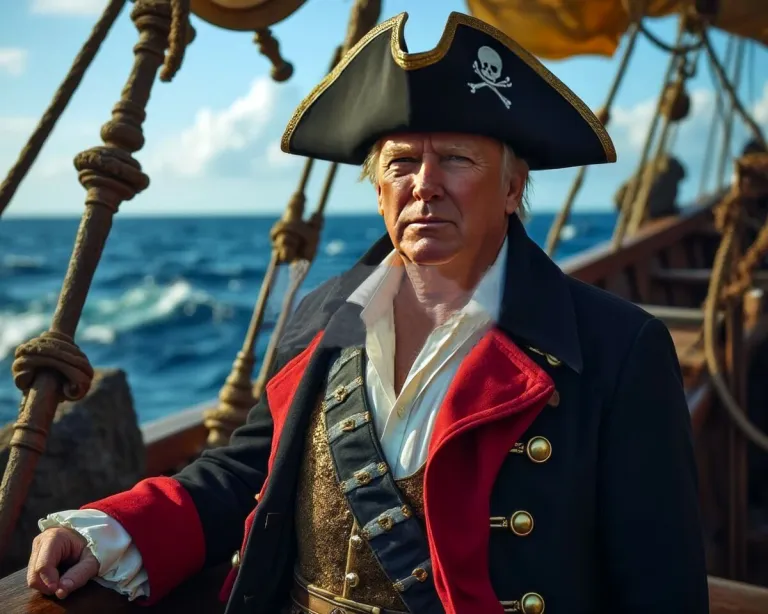
But the case of the oil tanker seized by the US highlights the instrumental use of the lie of the fight against drug trafficking. It is necessary to recount international piracy and the transition to a new phase of violation of international law, which began notoriously with the genocide in Palestine, in order to frame this action. The theft of the oil tanker, which was carrying 1,900,000 barrels of crude oil headed towards Cuba, is a direct expression of economic and military aggression.
The action denounced by the Bolivarian government, by progressive presidents, and by popular movements reminds us that this is not an isolated incident, but is clearly part of the imperialist strategy of economic suffocation against Venezuela, a country that, from a perspective of solidarity and self-determination, has offered oil support to neighboring nations. The economic blockade and forceful actions such as this one directly impact the Venezuelan people and their government’s ability to trade freely, and threaten Cuba, Nicaragua, and the entire Latin American continent.
This criminal act reveals a deep strategic and geopolitical motivation. The hijacking, which took place in international waters “far north of Trinidad and Tobago, towards the islands of Grenada,” as confirmed by President Nicolás Maduro, was perpetrated in an area of incalculable strategic value.
It is a fact—as shown by an investigation by journalist Marcos Salgado—that the United States has installed a state-of-the-art radar in Trinidad and Tobago. The area is of vital importance for the transport of maritime cargo and oil, serving as a route in and out of the Atlantic to the Caribbean and, strategically, for access to the Panama Canal. The action is thus part of a clear strategy to control and militarize this crucial maritime route connecting the Atlantic with the Pacific.
Furthermore, speculation about the cargo’s alleged Cuban destination is dismissed: the ship was intercepted on an almost easterly course, leaving the Caribbean Sea for the Atlantic, and not northwest. This confirms that the objective was not a specific cargo, but rather the reaffirmation of hegemonic control through piracy.
This act not only flagrantly violates international law and national sovereignty, but also constitutes a serious humanitarian crime, as the crew members were kidnapped and are currently missing. President Maduro has rightly denounced the inauguration of a “new era: that of criminal naval piracy in the Caribbean.”
From the point of view of class struggle, the theft of this resource and the attack on national sovereignty represent an attempt by financial capital and the imperialist state apparatus to reaffirm their dominance and destroy any economic alternative based on solidarity and a break with neoliberal dictates.
The increase in “pressure” on Caracas is also evident through the issuance of new “sanctions” against Venezuela, imposing restrictions on six oil tankers and shipping companies linked to these vessels. Four of these tankers, including the H. Constance, built in 2002, and the Lattafa, built in 2003, are Panamanian-flagged, while the other two are flagged in the Cook Islands and Hong Kong. All are supertankers that recently loaded crude oil in Venezuela.
The seizure of the vessel was the first of a Venezuelan oil shipment since the 2019 “sanctions” took effect and the first known action following the massive U.S. military deployment in the region. Such actions could cause short-term delays in Venezuelan crude exports.
More than 30 sanctioned oil tankers doing business in Venezuela could be at risk. The incident has alerted shipping agencies and operators, who are reconsidering whether to set sail from Venezuelan waters. Even before the seizure, sanctions had left several oil tankers loaded with hydrocarbons waiting for weeks and even months to set sail.
At the time of the incident, around 80 ships loaded with oil or waiting to load were in Venezuelan territorial waters, including the 30 sanctioned vessels. The shipping company Frontline estimates that 15% of the world’s fleet of large oil tankers has been affected by the sanctions imposed by the US.
Despite the aggression, Venezuelan oil production has shown resilience. Oil production (as reported by Minister Delcy Rodríguez) increased to 1.17 million bpd in November, from 1.13 million bpd the previous month, and consolidated at 1 million barrels per day (bpd) in October and November, remaining outside the OPEC+ quota system.
The “extrajudicial” nature of US operations has sparked reactions even in Europe:
Russian President Vladimir Putin has been in constant contact with Nicolás Maduro to reaffirm Russia’s support for the Bolivarian government and to offer his “diplomatic skills” in response to the seizure of the oil tanker. This diplomatic backing and Russian solidarity are part of a policy of mutual resistance to unilateral coercive measures.
Moscow uses the same term “piracy” to condemn US actions in the Caribbean, reaffirming that “extrajudicial operations are unacceptable because they undermine international law.”
Russia’s most profound response to US pressure is manifested in the acceleration and consolidation of bilateral economic cooperation, especially in the energy sector, which is vital for both countries facing “sanctions.”
In November 2025, Venezuela and Russia strengthened their energy alliance by extending oil operations until 2041. This agreement, which covers fields such as Boquerón and Perijá, involves an estimated investment of $616 million and seeks to keep joint projects active, with a production target of around 91 million barrels in total.
At the beginning of the second week of December 2025, President Maduro announced the signing of 19 new cooperation agreements between Russia and Venezuela. These documents were signed in a context of growing tension, consolidating a strategic alliance that covers energy, mining, finance, and defense, and includes initiatives to create a financial infrastructure independent of Western systems.
This deepening of the economic alliance with Russia and other actors in the Global South (such as China) is not only a measure of survival, but the practical construction of an alternative bloc to the capitalist-imperialist system dominated by the dollar and the dictates of Washington.
In the multipolar world, US action is configured as an act of flagrant piracy aimed at controlling Venezuela’s strategic resources and destroying its economic sovereignty, in a context of global hegemonic crisis.
And within the framework of the Anti-Fascist International and the International Brigades of Solidarity with Venezuela, the platform Breaking Borders Communicating Alternatives—an international platform for antagonistic and liberating communication, with its constant work in Africa, America, Asia, and Europe and more than fifty nodes participating in the Anti-Fascist International -, fulfilling its mandate to inform, educate, and mobilize, strongly denounces the act of international piracy perpetrated by the US administration; demands the immediate release of the oil tanker and its legitimate goods, the location and release of the kidnapped crew, and international condemnation of this policy of economic and military aggression. And it calls on the people of the world to take action.