Welcome to our collection of articles dedicated to green politics. As our world grapples with pressing environmental and societal challenges, the green political movement emerges as a beacon of change.
These articles explore core areas of green politics such as: degrowth, demilitarization, union and worker rights, and anti-capitalism.
Discover the nuances of degrowth as we examine strategies to reshape economies, moving away from military and capitalist growth models toward a more balanced, regenerative approach. Explore the imperative of demilitarization, unraveling the environmental and social impacts of excessive military expenditures, and delving into proposals for redirecting resources towards constructive, peace-building endeavors. Anti-capitalism is a key theme, challenging the prevailing economic systems that prioritizes profit over people and the environment. Union and worker rights in politics is another key area. Our articles dissect the green political stance on restructuring economies to prioritize social justice, environmental sustainability, and community well-being.
This thought-provoking content analyzes the intersectionality of these principles, offering insights into how green politics seeks to create a world where ecological responsibility, demilitarization, and anti-capitalist values converge for the betterment of society and the planet.
We hope you enjoy these explorations of the progressive ideals of green politics, providing you with valuable perspectives, informed analyses, and potential solutions to the challenges we face. Stay engaged, informed, and inspired, and let’s pave the way toward a future guided by the principles of degrowth, demilitarization, and anti-capitalism.
Spanish Prime Minister Pedro Sánchez asked the European Commission on Wednesday to block compliance with US sanctions against the International Criminal Court over its arrest warrants against Israeli leaders accused of war crimes and crimes against humanity in Gaza.
An assault on Cuba needs excuses for hating it. But given that any exchanges between the US and Cuba has been blocked out of the news for decades, it’s a bit difficult for a lot of folks to figure out why they are supposed to hate it and starve the people there. Let’s look through the eyes of those who promote an attack to find the real reasons.
One of the symptoms of the pathology known as “billionaire brain” is an inability to see beyond their own short-term gain. They would sack the planet for a few more stones on the pointless mountain of wealth. And we can see it happening. One of the symptoms of the pathology known as “billionaire brain” is an inability to see beyond their own short-term gain. We might find ourselves committed to a civilisation-ending event before we even learn that such a thing is possible.
As airstrikes and reports of torture under Ecuador’s U.S.-backed military regime continue to mount, fishermen tell Drop Site News they were blindfolded and held hostage for eight days.
We cannot separate fossil fuels from the ongoing U.S. and Israeli war on Iran. The volatility surrounding the Strait of Hormuz has shaken the global economy, restricting the passage of oil from the largest producers in the Gulfregion.
“Continuing to help the war machine will only cause you more pain. There has never been a better time to reject those orders, and join a fight that matters.”
Keir Starmer and Trump are putting on a puppet show for the cameras. Behind the scenes, Britain remains a junior imperialist partner working for the destruction of Iran.
Arriving in Spain on Friday for a two-day visit that will center on a gathering of progressive leaders from more than 100 political parties across five continents, Brazilian President Luiz Inácio Lula da Silva emphasized that the summit was not “an anti-Trump meeting.”
But the contrast between US President Donald Trump’s violent foreign and domestic policies and the international meeting, which will focus on wage inequality and electoral strategy for progressives, was unmistakable as Spanish President Pedro Sánchez opened the gathering at a press conference in Barcelona on Friday.
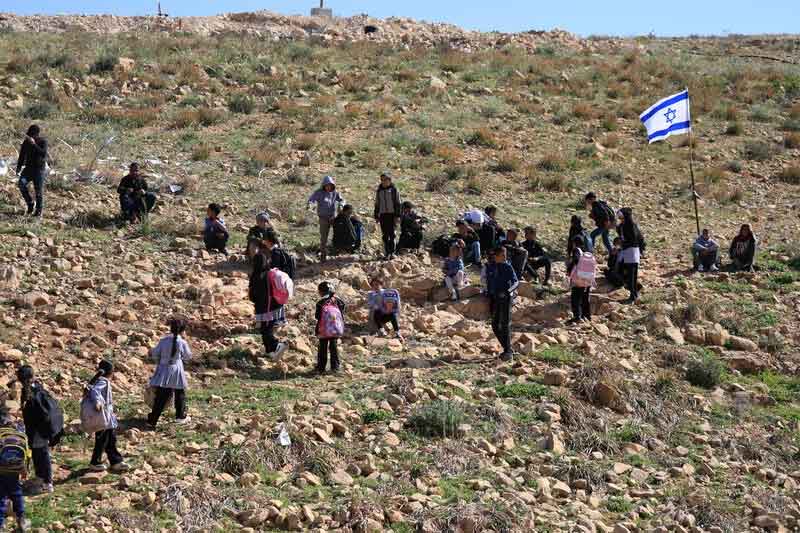
Israel’s latest settlement approvals mark a major escalation in its control over the occupied West Bank, with 34 new settlements advancing alongside dozens already approved since 2022. Human rights observers describe the move as the largest land grab in decades, deepening de facto annexation and accelerating displacement of Palestinians. Much of the planned construction targets privately owned land or areas recently depopulated by military operations. Critics warn that expanding settlements will intensify violence, entrench segregation, and further undermine prospects for a just and lasting resolution to the conflict. This development also raises serious concerns under international law and accountability mechanisms.