
“The worker becomes all the poorer the more wealth he produces.” Karl Marx
India’s growth story is often narrated through numbers – GDP expansion, rising markets, increasing foreign investment, and the steady rise in the number and wealth of billionaires. These indicators are presented as evidence of a thriving economy, a nation on the move, and a system delivering prosperity. Yet beneath this narrative of success lies a quieter, more disquieting reality—one that reveals not a temporary imbalance, but a structural condition.
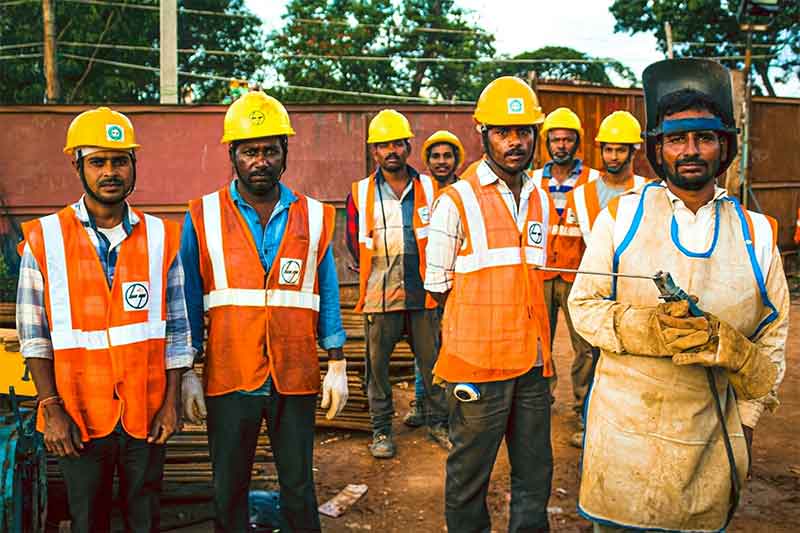
The workers who sustain this growth are increasingly excluded from its rewards.
In a billionaire-driven economy, labour is not failing; it is being systematically undervalued. Workers today are more productive than ever before. They generate higher output, adapt to technological change, and sustain the expansion of key sectors. Yet their wages do not reflect this rising productivity. Instead, the value they create is funnelled upward – into corporate profits, executive compensation, and the expanding wealth of those who own capital. This is not an incidental outcome, but a defining feature of contemporary capitalism.
Across the world, workers in such economies face stagnant wages despite high productivity, with wealth increasingly concentrated through ownership of capital and corporate profits. Billionaires control major employers—from large retail chains to global technology firms—while workers confront rising costs of living, growing inequality, and persistent job insecurity. The contradiction is stark: workers are more productive than ever, yet the value they create is increasingly diverted away from them.
This phenomenon, widely described as the productivity–pay gap or “decoupling,” is well documented. Since the late 1970s, productivity in developed and emerging economies has grown multiple times faster than typical worker compensation. As of 2026, this trend continues, creating a widening disconnect between the value created by employees and their actual earnings. The economy simultaneously witnesses rising productivity and wage stagnation—a combination that undermines the very premise that growth benefits all.
In India, this contradiction takes on a particularly sharp and complex form. The current economic landscape reflects what can be described as “jobful growth,” where both productivity and employment are increasing, but real wage growth remains subdued. While India is projected to lead global salary increases at around 9.1% in 2026, these gains are often neutralized by inflationary pressures. The result is a “nominal wage trap,” where salaries rise in absolute terms, but purchasing power declines or stagnates.
This pattern is visible across both rural and urban economies. Real wages in rural areas have shown alarming stagnation since 2014, a trend that has persisted through 2023–24 and continues into 2025–26, despite India maintaining a GDP growth rate of 6–7%. In urban areas, households face a similar squeeze, as rising incomes fail to keep pace with escalating living costs, creating a silent but widespread erosion of economic security.
Even where productivity rises, workers are not proportionately rewarded. In the informal sector, Gross Value Added (GVA) per worker grew by 4.54% in 2025, compared to a 3.88% increase in nominal wages. This gap illustrates a broader pattern: productivity gains are not being equitably shared. Instead, they are absorbed into corporate margins and capital accumulation.
Inequality data reinforces this reality. According to recent estimates, the top 10% of earners in India capture 58% of national income, while the bottom 50% receive only 15%. Corporate compensation trends mirror this imbalance. Median CEO compensation in Nifty 200 companies reached between ₹7–9 crore in 2025, reflecting a 12–15% increase, significantly outpacing the average employee salary hike of around 9%. In effect, those at the top capture a disproportionate share of economic gains, while the majority experiences stagnation.
Corporate profits have consistently outpaced wages. Factory output per worker has risen sharply, but worker pay has failed to keep pace. The share of national income going to wages and employee benefits has declined, while a growing proportion is captured as profits, dividends, and returns to investors. This shift signals a fundamental redistribution of economic gains – from labour to capital.
This divergence is not accidental—it is structural. Economic power is increasingly concentrated among a small number of large firms and conglomerates, particularly since 2015–16. As capital consolidates, so does the ability to influence markets, shape policy, and determine wage structures. Companies are narrowing the pool of top performers eligible for significant salary increases, reducing it from 10% to around 7%, and tightening evaluation systems under the rubric of “performance differentiation.” This allows firms to justify limited wage growth for the majority while rewarding a select few.
At the same time, there is a pronounced shift toward skill-based pay. Workers with expertise in artificial intelligence, machine learning, and cybersecurity command premiums of 30–40%, while those in traditional roles see minimal or no real wage growth. While this reflects changing economic demands, it also deepens inequality within the workforce, creating a divide between a highly paid minority and a stagnant majority.
Technology plays a dual role in this transformation. While increasing efficiency and productivity, artificial intelligence is also enabling the replacement of entry-level roles and reducing demand for certain categories of labour. This creates a bifurcated labour market in which only workers with specialized skills experience wage growth, while others face stagnation or displacement. Without deliberate policy intervention, automation risks undermining a people-centred economy.
The weakening of labour institutions has further exacerbated this imbalance. Trade union density in India has declined to around 6.3%, significantly reducing workers’ ability to bargain for higher wages and better conditions. At the same time, the rise of the gig economy and the expansion of contract-based employment have increased informality. A large proportion of workers are now engaged in precarious, unregulated work with low wages, minimal security, and limited access to social benefits.
Today, approximately 82% of India’s workforce operates within the informal sector. These workers often earn poverty-level wages, lack formal contracts, and remain excluded from social protection mechanisms. The informal sector has also borne the brunt of successive economic shocks—including demonetization, the implementation of GST, and the COVID-19 pandemic – which have suppressed wage growth and intensified economic vulnerability.
In such conditions, labour markets increasingly resemble what economists describe as monopsony structures, where a limited number of employers dominate hiring and are able to set wages below the true value of labour. Workers, constrained by limited alternatives and weakened bargaining power, are compelled to accept these terms. This dynamic results in lower wages, reduced employment quality, and higher profits for employers.
At a deeper level, the accumulation of wealth at the top reflects the nature of capital ownership itself. A significant portion of billionaire wealth is derived not from labour, but from inheritance, monopoly power, or ownership of productive assets such as factories, land, and technology. Economic theory has long suggested that labour generates surplus value, much of which is appropriated by owners rather than returned to workers. This structural extraction lies at the heart of modern inequality.
In a globalized economy, this imbalance is further amplified. Workers in lower-income regions contribute significantly to global supply chains but receive only a fraction of the value they help create. Reports have consistently highlighted how billionaire wealth expands rapidly even as ordinary people struggle to meet basic needs such as food, housing, and healthcare.
In India, these dynamics have produced an increasingly oligarchic economic structure. Wealth and economic power are concentrated among a small group of conglomerates, shaping policy outcomes and reinforcing forms of crony capitalism. The high cost of electoral politics ensures that governance aligns more closely with the interests of financiers than with the broader population. As a result, the welfare-oriented character of the Indian Constitution is gradually undermined.
As economic power concentrates, governance structures have increasingly shifted toward maintaining a cheap and compliant workforce. Labour protections are weakened, and policy frameworks often favour capital accumulation over worker welfare. The consequences are visible not only in economic inequality, but also in the erosion of democratic accountability.
This concentration of power extends into the political sphere, where exclusion operates along both class and gender lines. Women, despite gains at the Panchayati Raj level, face significant barriers in accessing political power at the state and national levels. Electoral politics is shaped by high financial costs, party gatekeeping, and deeply entrenched patriarchal norms. It is often characterized as a “masculine mob” culture, marked by aggression, intimidation, and violence.
Women encounter what can be described as “nomination exclusion,” where political parties prioritize dynastic and elite networks over broader representation. Financial barriers, lack of institutional support, and systemic bias further limit their participation. Even where women enter political spaces, they face targeted harassment, including online abuse, which acts as a deterrent to sustained engagement.
The intersection of class and gender ensures that women – particularly those outside elite circles—remain marginalized within both economic and political structures. Addressing this requires more than incremental reforms; it demands a fundamental challenge to the entrenched systems that define power and participation.
What emerges from this complex landscape is not a set of isolated issues, but a coherent economic and political order – one that systematically transfers value from labour to capital, from the many to the few. Productivity has not failed; it has been appropriated. Wages have not merely stagnated; they have been constrained within structures that prioritize ownership over effort.
This is no longer only an economic issue. It is a democratic one. When wealth shapes policy, when labour is fragmented and weakened, and when inequality becomes normalized, the promise of a welfare state begins to hollow out from within.
India today stands not at the threshold of a crisis, but within one—quiet, normalized, and deeply entrenched. It is a crisis that does not erupt suddenly, but deepens gradually, widening the distance between those who produce wealth and those who accumulate it.
The central question, then, is not whether the economy can grow faster, but whether it can grow more justly. Until that question is confronted with honesty and political will, India’s growth story will remain profoundly incomplete – impressive in its scale, but deeply unequal in its substance, and increasingly unsustainable in its promise.